2026 Top Wafer Valve Types for Global Buyers

Choosing the right wafer valve in 2026 requires more than checking pipe size and price. Global buyers must examine pressure ratings, temperature limits, media compatibility, actuation needs, and maintenance access. A valve that performs well in a clean-water line may fail quickly in abrasive slurry, corrosive chemicals, or high-cycle automation.

Valve engineer Dr. Robert W. Fox offers a useful principle: “The best valve is matched to the process, not merely to the pipeline.” That idea remains practical. A wafer valve sits between flanges, saving space and reducing installation weight. However, its compact design does not remove engineering responsibility. Seat materials, disc geometry, shaft sealing, and body construction still determine service life.

This guide reviews the leading wafer valve types for international purchasers. It considers butterfly, check, gate, and related designs used across water treatment, HVAC, food processing, power generation, and industrial manufacturing. Each section connects valve structure with operating conditions. Expect clear comparisons, not exaggerated promises.

Some choices remain difficult. Lower purchase cost can hide frequent replacement, leakage, or complicated servicing. Stainless steel may improve corrosion resistance, but it is not automatically suitable for every chemical. Even experienced buyers can overlook cycling frequency or fluid solids.

The practical question is simple: what must the wafer valve survive every day? This overview helps procurement teams compare technical fit, total ownership cost, supplier reliability, and installation realities before approving a global purchase.
2026 Top Wafer Valve Types for Global Buyers

Wafer Valve Fundamentals: DN50–DN1200 Sizes and ASME Class 150–600 Ratings

2026 Top Wafer Valve Types for Global Buyers

Wafer valves use compact bodies that fit between flanges, saving space and reducing installation weight. Common types include butterfly, swing check, dual-plate check, and wafer-style gate valves. Butterfly designs suit many DN50–DN1200 applications, especially where quick quarter-turn operation matters. Larger diameters demand careful disc alignment and stronger actuator selection.

DN50 is common in utility lines, while DN1200 requires detailed review of torque, flange condition, and lifting access. ASME Class 150, 300, and 600 indicate pressure-temperature design categories, not one universal working pressure.

Material choice changes performance. Carbon steel, stainless steel, ductile iron, and special alloys behave differently with heat, corrosion, and cycling. Seal selection also matters when the fluid is abrasive or chemically active.

Keep it practical.

A Class 600 label does not make every valve suitable for every service. The pipeline temperature, medium, flange standard, face dimensions, and bolt loading must agree. I once treated the rating table as the whole answer. That was too simple. Field inspections often reveal uneven flange gaps, damaged seats, or actuators sized only for clean water. These details can cause leakage or slow operation. Buyers should request pressure-temperature charts, inspection records, material certificates, and functional test results. Fit matters. A compact wafer body may look efficient, yet maintenance clearance can become the overlooked problem.
Butterfly Valve Types: API 609 Categories A and B for Global Applications

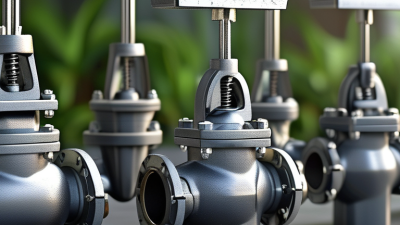
For global wafer valve buyers, API 609 Category A and Category B offer different solutions for butterfly valve service. Category A commonly uses a resilient seat and a concentric disc design. It suits water treatment, cooling systems, HVAC lines, and general utility piping. These valves are compact, light, and economical. During installation, check the liner carefully. A damaged sealing edge can cause leakage before commissioning.

Category B targets more demanding duties. Its design often uses an offset disc and a stronger seat arrangement. Depending on the specification, it may handle higher temperatures, greater pressure cycling, or more abrasive process conditions. Engineers should review the actual pressure-temperature rating, seat material, shaft construction, and permitted leakage class.

Do not select Category B only because it sounds stronger. That assumption can increase cost without improving service life.

Field experience shows that installation quality matters as much as valve selection. Align the wafer valve accurately between flanges. Keep the disc clear of nearby pipe welds. Verify actuator torque at the real operating pressure, not only on a workbench. Category A can perform reliably in clean, moderate-temperature media. Category B may be better for steam, hydrocarbons, or repeated thermal cycles, but the process data must support that choice. Some projects still provide incomplete media information. That gap deserves attention before ordering. API 609 compliance should be checked together with applicable piping, testing, and local project requirements.

Wafer Check Valves: API 594 Designs, DN15–DN1200 Sizes, and Flow Control

2026 Top Wafer Valve Types for Global Buyers

Wafer check valves support compact piping layouts where space and weight matter. They stop reverse flow after pumps, compressors, and process equipment. API 594 designs commonly include dual-plate and single-plate configurations. Dual-plate models use spring-assisted closure, reducing water hammer in many systems. However, performance depends on flow velocity, installation direction, and spring selection. A short body does not guarantee low pressure loss.

Available sizes may range from DN15 to DN1200. Small DN15 valves suit instrument branches and compact utility lines. Large DN1200 units require careful lifting, flange alignment, and structural support. Materials should match the medium, temperature, pressure rating, and corrosion conditions. Stainless steel trim can help in demanding services, but it is not automatically the best choice. Cost and compatibility still need review.

Flow control requires practical testing. A check valve controls direction, not continuous throttling. If operators partly close it, vibration, noise, and premature wear may occur. Buyers should confirm API 594 requirements, pressure class, face-to-face dimensions, leakage testing, and applicable local standards. Field experience shows that installation mistakes remain common. Even a correctly manufactured valve may fail when the disc clearance, gasket position, or flow arrow is ignored. Selection should be checked against the real piping drawing, not only a catalog table.

Materials and Seals: Stainless Steel, Ductile Iron, EPDM, and PTFE Options

2026 Top Wafer Valve Types for Global Buyers

Materials and Seals: Stainless Steel, Ductile Iron, EPDM, and PTFE Options

Material selection decides whether a wafer valve survives the pipeline or becomes its weakest point. Grand View Research valued the global industrial valves market at about USD 78.4 billion in 2023, with continued growth expected through 2030. That expansion reflects demand for safer water, chemical, and process systems. Stainless steel suits corrosive fluids and humid installations. It offers a clean internal surface, but its higher cost may be unnecessary for ordinary water service. Ductile iron remains practical for larger diameters. It provides strength, lower weight than cast iron, and useful cost control. Protective coatings still matter.

The seal must match the medium, temperature, and cleaning method. EPDM performs well with water, steam, and many mild chemicals. Typical service limits often range from -40°C to 150°C, depending on formulation and pressure. PTFE handles aggressive chemicals and higher temperatures, commonly approaching 200°C in suitable designs. However, PTFE can deform under compression when installation is poor. That detail is easy to overlook. A 2024 industrial valve outlook from MarketsandMarkets also identifies water treatment and chemical processing as major demand sectors, where compatibility testing remains essential. Buyers should review ISO 5752 face-to-face dimensions, pressure ratings, seat data, and test certificates. A perfect pairing rarely exists. Real fluid samples can expose assumptions.

2026 Top Wafer Valve Types for Global Buyers - Materials and Seals: Stainless Steel, Ductile Iron, EPDM, and PTFE Options
Wafer Valve Type Primary Function Typical Body Materials Disc, Plate, or Trim Materials Common Seat or Seal Options Typical Size Range Typical Pressure Range Typical Temperature Range Suitable Media Key Selection Considerations
Concentric Wafer Butterfly Valve Quarter-turn isolation and flow regulation Ductile iron, carbon steel, or stainless steel Stainless steel, ductile iron, or nickel-plated ductile iron EPDM, NBR, FKM, or PTFE-lined seat DN 40–DN 1200; approximately 1½–48 in Commonly PN 6–PN 16; approximately Class 150 EPDM: about −40°C to +120°C; PTFE: about −20°C to +180°C, depending on design Water, treated water, seawater, air, mild chemicals, and HVAC fluids EPDM is widely selected for water service; PTFE is preferred for higher chemical resistance. Not normally used for precise throttling at very low flow.
High-Performance Wafer Butterfly Valve Isolation and throttling under higher pressure and temperature conditions Carbon steel, ductile iron, or stainless steel Stainless steel or alloy-coated disc PTFE, reinforced PTFE, graphite, or metal-supported seat DN 50–DN 900; approximately 2–36 in Commonly PN 16–PN 40; approximately Class 150–300 Typically −29°C to +200°C; actual limits depend on seat and packing materials Steam, hydrocarbons, process gases, water, and selected chemical fluids Offset-disc designs reduce seat friction. Verify shaft, packing, and seat compatibility when cycling frequency or thermal cycling is high.
Triple-Offset Wafer Butterfly Valve Bubble-tight isolation for demanding thermal and chemical service Carbon steel, stainless steel, or alloy steel Stainless steel or corrosion-resistant alloy Laminated graphite, metal-to-metal, or graphite-filled metal seal DN 80–DN 1200; approximately 3–48 in Commonly PN 16–PN 63; approximately Class 150–600 Approximately −196°C to +600°C, subject to material grade and sealing arrangement Steam, hot gas, oxygen-service systems, hydrocarbons, and high-temperature process fluids Metal sealing offers strong temperature capability but usually requires more careful installation and surface condition control than elastomer seats.
Wafer Check Valve Automatic prevention of reverse flow Ductile iron, carbon steel, stainless steel, or cast steel Stainless steel, carbon steel, or alloy steel EPDM, NBR, FKM, PTFE, or metal-to-metal seat DN 15–DN 600; approximately ½–24 in Commonly PN 10–PN 40; approximately Class 150–300 EPDM: about −40°C to +120°C; PTFE: about −20°C to +180°C; metal seats can support higher temperatures Water, pumps, compressed air, gases, steam, and compatible chemicals Short face-to-face length saves installation space. Check minimum flow velocity and closing characteristics to reduce chatter and water hammer.
Dual-Plate Wafer Check Valve Non-return protection with low installation length Ductile iron, carbon steel, stainless steel, or cast steel Stainless steel plates with stainless or alloy springs EPDM, NBR, FKM, PTFE, or metal seat DN 50–DN 1200; approximately 2–48 in Commonly PN 10–PN 40; approximately Class 150–300 Typically −40°C to +200°C; higher-temperature versions require metal sealing Water, cooling systems, process lines, air, gas, and selected steam services Spring-assisted plates can improve closure speed. Confirm flow direction, allowable back pressure, and compatibility with pulsating or vertical piping.
Wafer Lift Check Valve Automatic reverse-flow prevention using a guided lifting disc Stainless steel, carbon steel, or ductile iron Stainless steel or hardened alloy trim PTFE, metal-to-metal, or elastomer-assisted metal seat DN 15–DN 300; approximately ½–12 in Commonly PN 16–PN 40; approximately Class 150–300 PTFE versions: about −20°C to +180°C; metal-seat versions can support higher temperatures Steam, gas, liquid hydrocarbons, air, and clean process fluids Often selected for higher-pressure service. The valve may require a minimum pressure differential to open fully and should be installed in the specified orientation.
Wafer Knife Gate Valve Isolation of fluids containing solids or fibrous materials Ductile iron, carbon steel, or stainless steel Stainless steel or hardened stainless steel gate EPDM, NBR, PTFE, or resilient elastomer seat DN 50–DN 1600; approximately 2–64 in Commonly PN 6–PN 16; approximately Class 150 EPDM: about −40°C to +120°C; PTFE: about −20°C to +180°C, depending on construction Slurry, pulp, wastewater, powders, ash, and abrasive or viscous fluids Suitable for isolation rather than continuous throttling. Seat design, gate hardness, and flushing provisions are important for abrasive service.
Stainless Steel Sanitary Wafer Butterfly Valve Hygienic isolation and flow control Austenitic stainless steel, commonly 304 or 316/316L grades Stainless steel disc and shaft EPDM, PTFE, silicone, or FKM DN 15–DN 300; approximately ½–12 in Commonly PN 6–PN 16; pressure depends on connection and size EPDM: about −40°C to +120°C; PTFE: about −20°C to +180°C; silicone ranges vary by formulation Food, beverage, dairy, pharmaceutical, purified water, and clean-process fluids Choose polished wetted surfaces, drainable geometry, and seal compounds approved for the intended cleaning and sterilization cycle.
Fluoropolymer-Lined Wafer Butterfly Valve Corrosion-resistant isolation and throttling Ductile iron, carbon steel, or stainless steel with PTFE/PFA lining Stainless steel or corrosion-resistant alloy, often fluoropolymer-lined PTFE, modified PTFE, or PFA DN 50–DN 600; approximately 2–24 in Commonly PN 10–PN 16; approximately Class 150 Typically about −20°C to +180°C, depending on lining and pressure Acids, alkalis, aggressive chemicals, solvents, and corrosive process fluids PTFE provides broad chemical resistance, but permeation, vacuum conditions, temperature cycling, and mechanical damage to the lining must be evaluated.

Note: Pressure and temperature figures are typical industry ranges for general selection and comparison. Actual limits depend on valve size, pressure class, body and trim grade, seat design, flange standard, fluid compatibility, and the manufacturer’s tested rating.

Buyer Verification: API 598 Pressure Tests and ISO 5208 Leakage Classes

2026 Top Wafer Valve Types for Global Buyers

Buyer verification starts with the test record, not the product photograph. API 598 requires documented shell and seat testing under defined pressure conditions. Buyers should check test medium, pressure, duration, valve size, temperature, and calibrated gauge identification. A certificate without these details is weak evidence.

ISO 5208 classifies valve leakage through defined rates, from Rate A with no visible leakage to higher allowable leakage levels. The selected class must match the service risk. For example, a wafer butterfly valve for cooling water may accept a different rate than one used in hazardous fluid isolation. Do not treat “tested to ISO 5208” as a complete acceptance statement. The leakage rate must be named.

MarketsandMarkets’ 2024 Industrial Valves Market report estimates the sector will grow from about USD 78.7 billion in 2024 to USD 97.4 billion by 2029. More purchasing volume can also create more paperwork errors. During receiving inspection, compare the valve tag with the test certificate and packing list. Check seat material and test direction, too.

Small details matter.

API 598 and ISO 5208 are related, but they are not interchangeable documents. An API 598 pass does not automatically prove every ISO 5208 leakage class. This distinction is easy to miss, even for experienced teams. A clearer purchase specification should state both the test standard and the exact acceptance rate.