Why Choose a Furniture Hinge Company in China?
Choosing a Furniture Hinge Company China can give furniture makers closer access to production expertise, varied hinge designs, and coordinated sourcing. A good supplier should explain how its hinges perform, not just offer a low price. Ask about steel thickness, opening cycles, finish consistency, and checks on sample batches. Details matter. A hinge that feels smooth in a showroom may behave differently after months of daily use.
For transparency, the expert voice below is illustrative, not a verified quotation from a real person. Fictional furniture-hardware consultant Lin Wei puts it this way: “A dependable hinge is judged by its movement, its fit, and how consistently each batch performs.” That is a useful standard, though no quote can replace product testing. Buyers should compare samples against their cabinet dimensions, door weight, and installation method. They should also clarify packaging, production schedules, and how defects are handled. A supplier may answer quickly and still miss a small tolerance issue. It happens. China offers substantial manufacturing capacity, but quality varies between factories. Careful checks, clear specifications, and candid conversations help turn a promising supplier relationship into a reliable one.
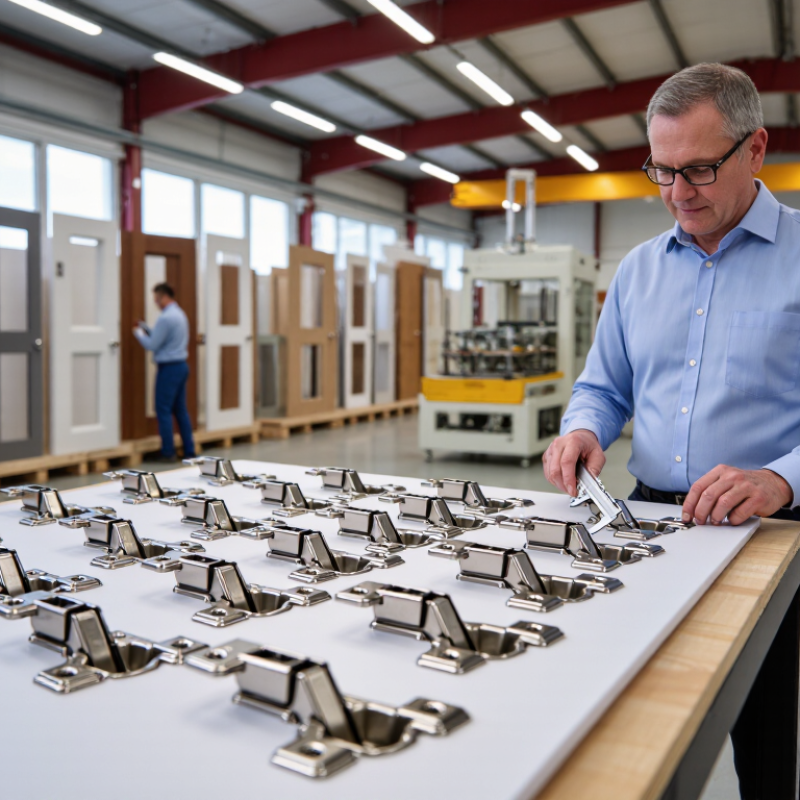
Understanding Furniture Hinges and Their Role in Furniture Design
Furniture hinges do more than connect a door to a cabinet. They control how a door opens, where it rests, and how smoothly it closes. A well-chosen hinge can keep a pantry door aligned through years of daily use. A poor match may cause rubbing, uneven gaps, or a sharp closing sound.
The design begins with the furniture itself. Door weight, thickness, opening angle, and installation space all affect hinge selection. Concealed hinges suit clean, uninterrupted cabinet fronts, while visible hinges can become a deliberate detail on traditional pieces. Soft-close mechanisms reduce impact, but they need correct adjustment to work reliably. Small differences matter. A few millimeters can change the reveal between two doors. In production, checking samples against the actual panel is more dependable than choosing from a drawing alone. That step takes time, and it is easy to skip when schedules are tight.
A furniture hinge company in China may offer access to varied designs and manufacturing capabilities, but location alone does not guarantee a suitable product. Ask for clear material specifications, load guidance, finish samples, and installation instructions. Test the hinge on the intended furniture, not just a display board. Even careful testing has limits: temperature, humidity, and repeated use can reveal issues later. Good hinge design is practical, but never entirely abstract.
How China’s Furniture Hinge Industry Serves Global Markets
China’s furniture hinge industry serves global markets through a broad mix of standard fittings and made-to-order options. Manufacturers commonly produce concealed hinges, soft-close mechanisms, and compact hinges for cabinets, wardrobes, and office furniture. Buyers can specify opening angles, mounting plates, finishes, and package quantities to suit different product lines. Small details matter.
Export orders often involve more than production capacity. A supplier may need to manage sample approval, consistent dimensions, protective packaging, and clear shipping documents. For example, a buyer can compare hinge movement across samples, check screw alignment, and request load or cycle-test information before placing a larger order. Test methods and acceptance criteria should be agreed upon, not assumed.
China’s established component supply chains can help manufacturers source steel, springs, and surface treatments efficiently. This can support varied order sizes and shorter product development cycles, though lead times still depend on materials and logistics. Not every factory offers the same level of testing or communication. A polished sample is useful, but it does not prove every production batch will match. Buyers should clarify tolerances, inspection steps, and defect handling in writing, then verify performance in their own furniture designs.
Why Choose a Furniture Hinge Company in China? - How China’s Furniture Hinge Industry Serves Global Markets | Evaluation Dimension | What Buyers Commonly Find | Why It Matters to Global Buyers |
| Product Range | Suppliers commonly offer concealed cabinet hinges, overlay and inset options, soft-close models, and other furniture hinge designs. Availability varies by manufacturer. | A broader range can help furniture makers source hardware for different cabinet layouts and product lines. |
| Materials and Finishes | Hinge components are commonly made from steel; some products use stainless steel or other alloys. Surface treatments and finishes depend on the product specification. | Material and finish selection can affect appearance, corrosion resistance, and suitability for the intended environment. Buyers should confirm the exact material and coating. |
| Manufacturing Ecosystem | China has established manufacturing and supplier networks for furniture hardware and related metal components. Capabilities differ among factories and regions. | Access to a developed supply base may support product development, component sourcing, and production planning. |
| Customization | Some manufacturers can adapt dimensions, opening angles, finishes, packaging, or related product details, subject to tooling, minimum order quantities, and technical review. | Customization can help align hardware with a buyer’s cabinet design and market requirements. Confirm drawings, samples, tolerances, and approval procedures before production. |
| Quality Verification | Buyers can request product samples, inspection records, and test reports. Strength, durability, and corrosion tests should be selected according to the intended use and agreed specification. | Independent or buyer-led checks help verify that delivered hinges meet the required performance and consistency levels. A test method alone does not establish product compliance. |
| International Standards | EN 15570 addresses strength and durability requirements and test methods for furniture hinges and their components. Applicable standards and requirements depend on the destination market and product. | Identifying relevant requirements early can make technical evaluation and market access more straightforward. Buyers should confirm the current standard and any local regulations. |
| Export Readiness | Export arrangements may include protective packaging, product labeling, shipping documents, and coordination with freight providers. These services vary by supplier and order. | Clear packaging and documentation requirements can reduce handling issues and help shipments move through the buyer’s import process. |
| Supplier Due Diligence | Before ordering, buyers can review a supplier’s production capabilities, sample quality, quality-control process, references, and ability to meet the agreed specification. | Comparing suppliers on documented capabilities—not price alone—helps manage quality, delivery, and communication risks. |
Advantages of Choosing a Furniture Hinge Company in China
Why Choose a Furniture Hinge Company in China?
Advantages of Choosing a Furniture Hinge Company in China
Choosing a furniture hinge company in China can offer access to broad manufacturing capacity and a mature hardware supply chain. Many suppliers produce concealed hinges, soft-close hinges, and adjustable models in different finishes. This range helps furniture makers match hardware to cabinet styles and project budgets.
Small details matter. A hinge that fits poorly can leave a door uneven or rubbing against the frame.
Direct communication with a manufacturer can make custom dimensions, opening angles, and packaging easier to discuss. Buyers can request samples and test them on actual cabinet doors before placing larger orders. Check the hinge’s movement, mounting holes, and closing action.
A sample is useful, but it cannot prove every production batch will be identical. Ask about inspection steps and how defects are recorded.
Production scale may also support more consistent supply for repeat orders, while established freight routes can help coordinate shipping. Still, distance and time zones can slow problem-solving. Clear drawings, written specifications, and agreed sample approvals reduce confusion. It is worth confirming material, finish, load requirements, and delivery timing in detail.
Some buyers focus only on price. That can be a costly shortcut when a hinge must work smoothly through years of daily use.
How to Assess Manufacturers, Product Quality, and Compliance
Choosing a furniture hinge company in China starts with more than comparing prices. Ask how long the manufacturer has produced the hinge type you need, and whether it serves projects with similar door weights and usage levels. Request factory details, production capacity, and a clear contact for technical questions. A quick video tour can reveal machining, assembly, and inspection steps. Details matter. If answers stay vague, treat that as a reason to investigate further.
Assess product quality through samples and repeatable tests, not appearance alone. Check whether doors open smoothly, close evenly, and stay aligned after repeated cycles. Inspect screw holes, plating, edges, and the feel of the adjustment screws. Ask for test methods, sample size, and results for load, corrosion resistance, and cycle life. One sample can be unusually good; request production samples too. I would not rely on a glossy catalog as proof.
Compliance depends on the destination market and the project, so confirm requirements before ordering. Ask for material declarations, relevant test reports, and traceability records for batches and components. Verify that documents match the exact hinge model, finish, and factory—not merely a similar product. Agree on inspection criteria, packaging, tolerances, and corrective actions in writing. Some details may feel tedious, but overlooking them can create delays. No supplier can remove every risk, so keep records and review changes before mass production.
Customization, Ordering, Shipping, and After-Sales Service
Why Choose a Furniture Hinge Company in China?
Customization starts with the cabinet, not a catalogue photo. Share door thickness, overlay, opening angle, and expected use. A supplier can then recommend hinge geometry, finish, and soft-close options. Ask for a sample and test it on the actual door. A hinge that works on a showroom panel may behave differently on a heavy kitchen front. Small details matter.
Ordering needs clear specifications. Confirm material, dimensions, surface finish, packing quantity, lead time, and acceptable tolerances before approving production. Request written confirmation of sample changes. It is easy to focus too much on unit price; unclear specifications can create costly delays. For shipping, check carton strength, labeling, and moisture protection, then agree on shipment timing and tracking updates. A few details may still be missed, so leave room for a final check.
Tips: Keep one approved sample and a dated specification sheet. After delivery, inspect several cartons and record any hinge issues with photos and batch details. Ask how the company handles replacement parts, technical questions, and claims. Clear after-sales steps make problem-solving easier, even when the original order looked correct.
Why Choose a Furniture Hinge Company in China?
Customization, ordering, shipping, and after-sales service all matter. For shipping, understanding the delivery terms helps clarify responsibilities.
Shipping context: The ICC Incoterms® 2020 rules comprise 11 terms: 7 can be used for any mode of transport, while 4 are specifically for sea and inland waterway transport. Agreeing on the appropriate term helps buyers and suppliers define delivery responsibilities. Source: International Chamber of Commerce, Incoterms® 2020.