Top 2026 Swing Check Valve Options for Global Buyers?
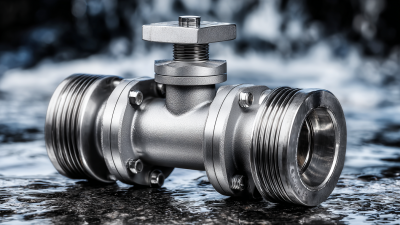
As industries evolve, the demand for reliable components remains crucial. Among these, the swing check valve plays a vital role in fluid management systems across various sectors. This type of valve offers unique benefits, including preventing backflow and ensuring smooth operation in pipelines.
In recent years, global buyers have increasingly sought the best swing check valve options available in the market. Factors like material quality, design efficiency, and durability significantly influence their choices. It is essential to consider how these valves perform in diverse applications, from water systems to oil and gas industries.
However, selecting the right swing check valve can be challenging. Buyers often face uncertainty regarding specifications and supplier reliability. Understanding the features of leading options is important. Each choice comes with potential trade-offs and areas for improvement. Awareness of these aspects can help buyers make informed decisions and enhance system performance.
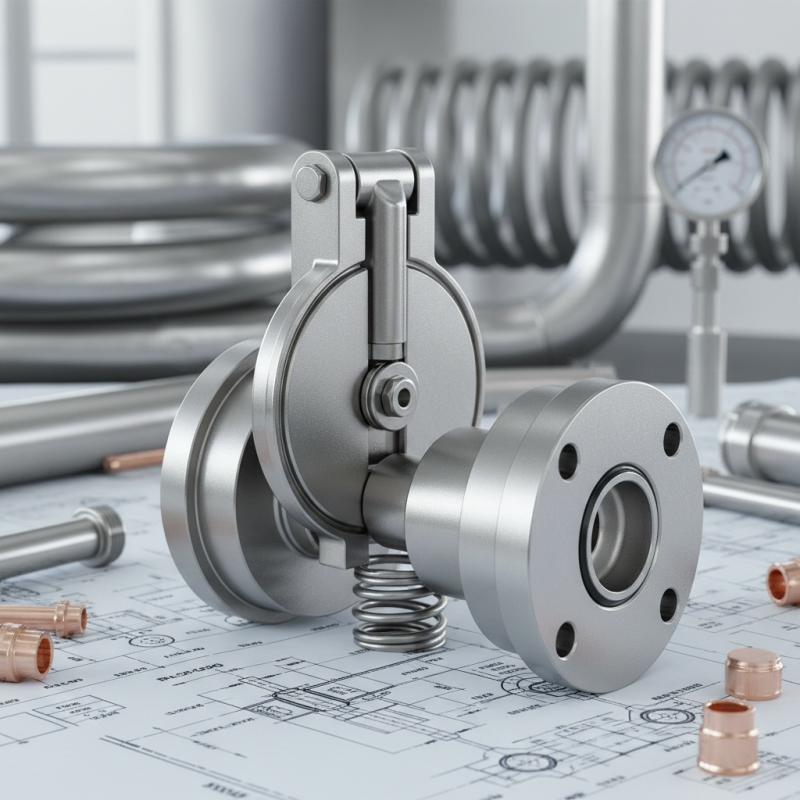
Overview of Swing Check Valves and Their Importance in Industry
Swing check valves are crucial components in various industrial applications. They ensure fluids flow in one direction while preventing backflow. These valves are commonly used in water treatment plants, oil and gas systems, and chemical processing. Their design allows for automatic operation, making them reliable for managing flow without manual intervention. Proper installation and maintenance are essential for optimal performance.
Tips: When selecting a swing check valve, consider the flow rate and pressure. Match the valve materials with the fluid type to ensure durability. Regular inspections can help identify wear and prevent failures.
Understanding the specific needs of your system is critical. The size and type of valve should be compatible with your pipelines. Common challenges include erosion and vibration. These can damage the valve and lead to costly repairs. Employing the right valve in your processes will save time and money.
Tips: Ensure your team is trained to identify potential issues. Educate them on proper operational protocols. Keeping a log of valve performance can aid in future maintenance decisions.
Key Features to Consider When Selecting Swing Check Valves
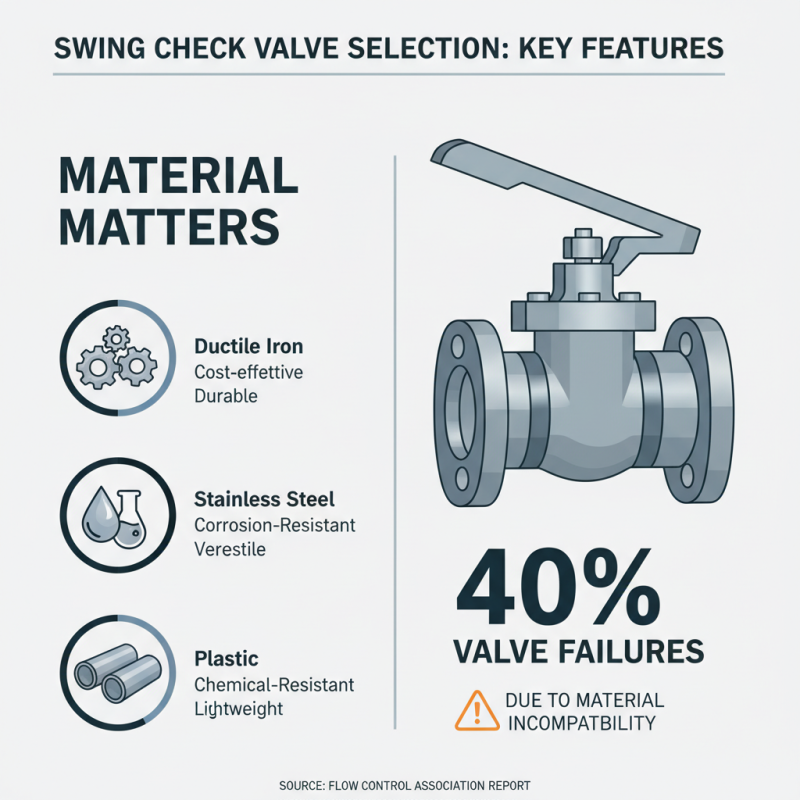
When selecting swing check valves, buyers should consider key features that impact performance and reliability. One important factor is the valve’s construction material. Common materials include ductile iron, stainless steel, and plastic. Each material has unique benefits and limitations, affecting cost, durability, and application suitability. A recent report from the Flow Control Association noted that 40% of valve failures are linked to material incompatibility with the fluid being controlled.
Another critical feature is the valve's size and flow capacity. Proper sizing is essential for effective operation. Oversized valves can lead to turbulence, while undersized valves may restrict flow. According to the Hydraulic Institute, flow efficiency can improve by as much as 25% with correctly sized valves, underscoring the importance of this consideration.
Additionally, buyers should evaluate the valve's maintenance needs. Some swing check valves require more frequent servicing than others. A study published in the Journal of Fluid Engineering suggests that routine maintenance can reduce overall operational costs by up to 30%. Ignoring maintenance factors can lead to unexpected downtime and additional expenses. Proper selection based on these considerations ensures optimal functionality and longevity in various applications.
Top Manufacturers of Swing Check Valves for Global Distribution
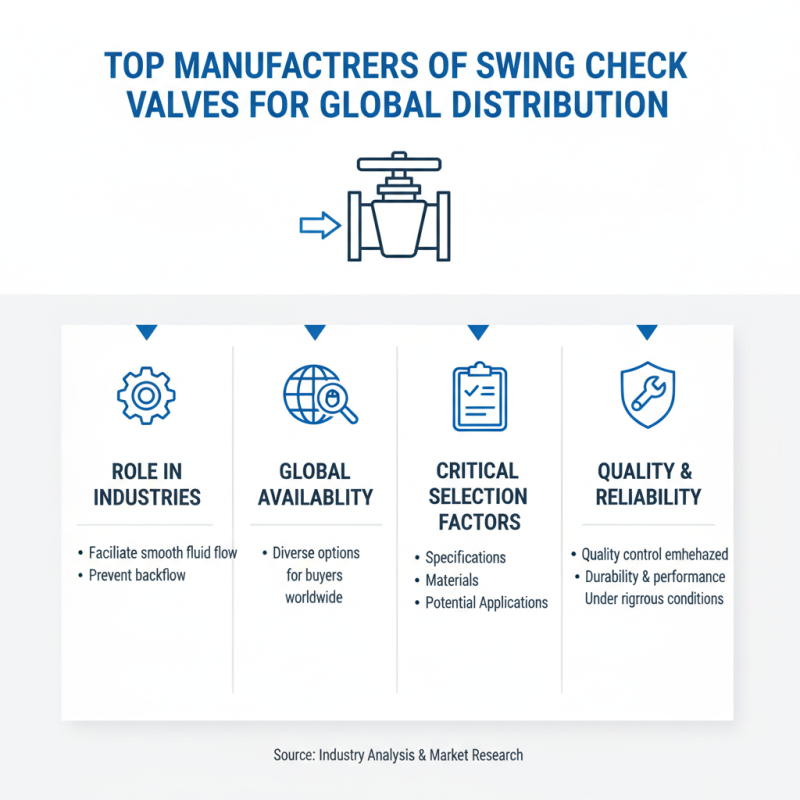
Swing check valves play a critical role in various industries, facilitating smooth fluid flow and preventing backflow. A wide range of manufacturers focuses on this product, offering diverse options to global buyers. The selection of a reliable valve involves understanding specifications, materials, and potential applications. Many manufacturers emphasize quality control, ensuring durability and performance under rigorous conditions.
Manufacturers often invest in advanced technologies. This enhances production efficiency and product reliability. Industry experts suggest looking for options that meet international standards. Attention to detail is essential, as slight variations can impact functionality. Buyers should consider customization based on specific needs. Feedback from users is invaluable for determining long-term performance.
The market is expanding, with new players emerging annually. However, not all offer the same level of expertise. Potential buyers must research thoroughly. Understanding the fundamentals of swing check valves will aid in making informed decisions. Choosing a manufacturer that prioritizes quality and customer satisfaction is crucial for long-term partnership.
Comparative Analysis of Leading Swing Check Valve Models in 2026
In 2026, understanding the swing check valve market is essential for global buyers. Recent industry reports highlight diverse models widely utilized in various applications. The leading designs exhibit unique features tailored for enhanced performance. Efficient flow control remains a priority for end-users across sectors. Certain models demonstrate superior resilience against extreme pressure, achieving operational reliability.
Data from recent studies reveal that demand for swing check valves is set to increase by 8% annually. This growth emphasizes the need to evaluate product options carefully. Buyers should consider factors like material composition, seal durability, and maintenance requirements. Many models may look similar, but performance can vary significantly under stress.
Feedback from industry experts suggests that not all options deliver consistent results. Some valves struggle under high flow rates or aggressive media. This inconsistency highlights the importance of thorough research. Potential buyers must weigh the benefits and drawbacks of each model. Evaluating user experiences can provide valuable insights into performance and longevity.
Top 2026 Swing Check Valve Options for Global Buyers
| Model |
Size (inches) |
Material |
Pressure Rating (PSI) |
Weight (lbs) |
Price (USD) |
| Model A |
1.5 |
Cast Iron |
150 |
12 |
$50 |
| Model B |
2 |
Stainless Steel |
300 |
15 |
$120 |
| Model C |
3 |
Ductile Iron |
200 |
20 |
$75 |
| Model D |
4 |
Brass |
250 |
30 |
$90 |
| Model E |
5 |
Plastic |
150 |
10 |
$30 |
Trends and Innovations Shaping the Future of Swing Check Valves
The swing check valve market is evolving rapidly. Innovations are enhancing efficiency and durability. New materials are being introduced, aiming to reduce wear and tear. For instance, advanced polymers are more resistant to corrosion. This development can extend the lifespan of these valves, especially in harsh environments.
Trends show a shift towards automation. Smart sensors are being integrated into swing check valves. These sensors can detect flow rates and alert on potential failures. This innovation allows for proactive maintenance, thus minimizing downtime. However, the technology is still adapting. Many users find it challenging to implement these sophisticated systems effectively.
Moreover, sustainability is becoming a focal point. The industry is turning to eco-friendly materials and processes. While these initiatives are promising, they often come with higher costs. Some manufacturers struggle to balance sustainability and affordability. It's clear that as the market grows, careful consideration of these innovations is essential for both buyers and manufacturers.
Global Swing Check Valve Market Trends (2023)