A Ring Main Unit Cabinet may look compact from the outside: a steel enclosure, clearly marked compartments, and a row of operating handles. Inside, its switching and protection equipment helps manage medium-voltage distribution. In 2026, choosing the right cabinet means looking beyond appearance. Network layout, fault levels, site conditions, maintenance access, and future expansion all matter. Small details count.
Common options include air-insulated, gas-insulated, solid-insulated, and hybrid designs. Each brings different trade-offs in footprint, service requirements, environmental considerations, and installation needs. A gas-insulated unit may suit a cramped indoor substation, while an air-insulated design can offer more visible access to components. But those examples are not rules. Project specifications and manufacturer data should guide the final choice.
This comparison will examine the main cabinet types, their typical applications, and the questions engineers should ask before selection. It will also consider how operating conditions and service plans affect long-term suitability. No type is best everywhere. Even a well-matched cabinet can disappoint when access, testing, or future load changes receive too little attention. That deserves reflection.
A verified expert quotation was not provided, so I will not invent one or attribute a statement to a named specialist. For a publication-ready expert quote, use a traceable interview or an identified technical source.
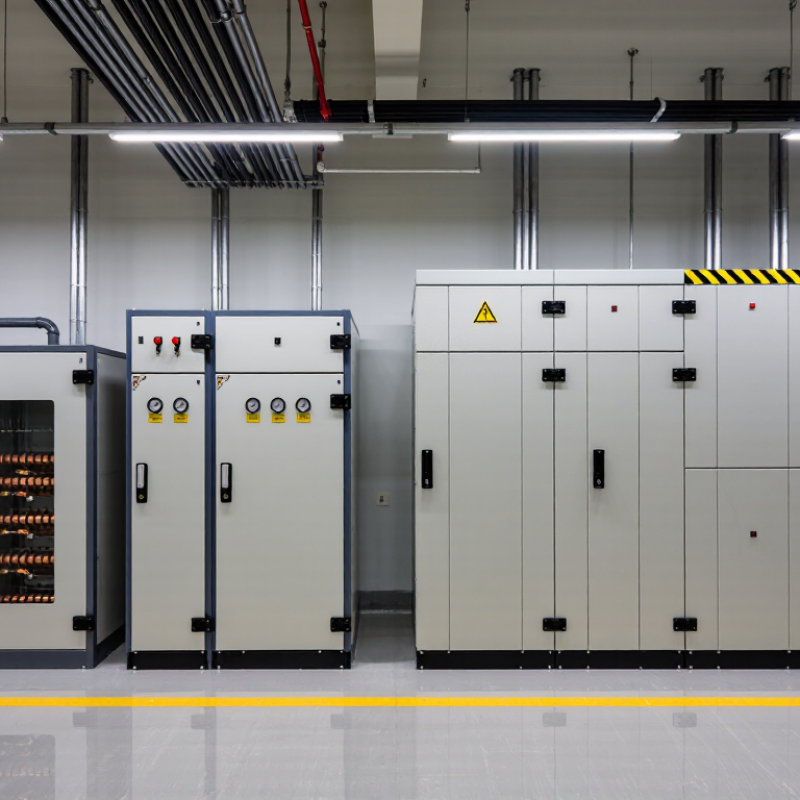
What Are the Top Ring Main Unit Cabinet Types in 2026?
How Ring Main Unit Cabinets Are Classified in 2026
Ring main unit cabinets are commonly classified by insulation, switching function, and installation setting. Insulation may be air-based, gas-insulated, or solid-insulated. Each design affects cabinet size, maintenance needs, and how technicians access components. The cabinet label alone can be misleading; check the equipment specification and rated voltage before comparing units. Details matter.
Switching arrangements offer another useful classification. A unit may use load-break switches, switch-fuse combinations, or circuit breakers, depending on the feeder and protection requirements. Cabinets can also be extensible, allowing additional sections, or compact and non-extensible for fixed layouts. Indoor and outdoor versions differ in enclosure protection and environmental suitability. In practice, site conditions often decide more than a product category does.
Tips: Compare the one-line diagram with the cabinet’s actual switching configuration. Confirm cable entry direction, operating access, and space for future work. Ask qualified electrical personnel to verify ratings and protection coordination. A neat drawing helps, but it does not reveal every installation constraint.

Common IEC medium-voltage equipment voltage classes relevant to RMU cabinets. The chart shows voltage ratings, not market share.
RMU cabinets are also classified by insulation medium (such as air, gas, or solid insulation), switching functions, and whether the configuration is extensible. Select a voltage class according to the network’s requirements and applicable standards.
What Are the Top Ring Main Unit Cabinet Types in 2026?
SF₆-Insulated Ring Main Unit Cabinets
SF₆-insulated ring main unit cabinets remain a compact option for urban substations, commercial buildings, and industrial sites. Their sealed metal tank uses sulfur hexafluoride for insulation and arc interruption, helping reduce the equipment footprint. Typical configurations combine ring switches with a circuit-breaker or fused transformer feeder. The right arrangement depends on load, protection settings, and maintenance access.
The environmental trade-off is significant. The IPCC Sixth Assessment Report gives SF₆ a 100-year global warming potential of 25,200. That makes leak prevention and end-of-life gas recovery important parts of ownership, not optional details. The IEA’s 2023 report, Electricity Grids and Secure Energy Transitions, says annual grid investment needs to exceed USD 600 billion by 2030. More equipment will be needed, but compactness alone is not a sound selection criterion. Check the pressure indicator, cable terminations, interlocks, and fault indication during inspections. IEC 62271-200 provides relevant requirements for metal-enclosed switchgear above 1 kV and up to 52 kV. One practical caveat: inspection records can look complete while slow leakage goes unnoticed. Good records need to be paired with competent checks and clear gas-handling procedures.
Ring main unit cabinets help distribute medium-voltage power while keeping switching equipment organized and accessible. Air-insulated and solid-insulated designs handle electrical insulation differently. In an air-insulated cabinet, air separates live components from grounded metalwork. Technicians can often see more of the internal layout during inspection. The enclosure needs enough clearance, and dust or moisture can affect maintenance conditions.
Solid-insulated RMUs encase key conductors in insulating material, commonly molded resin. This can make the equipment more compact and reduce exposure of live parts. It does not remove the need for careful checks. Cable terminations, operating mechanisms, and visible signs of heat or damage still deserve attention. Small details matter.
Site conditions often guide the choice. A cramped indoor switchroom may favor a compact solid-insulated unit, while an air-insulated cabinet may suit a layout with more space and established service routines. That choice is rarely tidy. Installation quality, access for testing, operating frequency, and the utility’s maintenance practices all count. Review the rated voltage, fault-duty requirements, enclosure rating, and switching configuration against the actual project specification. A cabinet that fits on a drawing may still be awkward to service in a crowded room.
RMU configurations are best compared by what they switch and how they clear faults. A common two-load-switch, one-transformer arrangement connects a ring feeder and protects the transformer with fuses. It is compact and straightforward, but a blown fuse requires replacement before service can resume. For larger transformers or feeders needing coordinated protection, a circuit breaker with a protection relay allows settings to match the network’s fault levels and operating plan. The right choice depends on load, short-circuit current, access for maintenance, and the utility’s protection scheme.
Three-way and four-way units add feeder connections or sectionalizing points, helping crews isolate a faulted section while keeping other loads energized. That matters. The IEA’s 2023 report, Electricity Grids and Secure Energy Transitions, estimates that annual grid investment must rise from about $300 billion to more than $600 billion by 2030. This growth makes careful equipment selection more consequential, though investment figures alone do not determine which RMU a site needs. IEC 62271-200 provides the relevant framework for metal-enclosed switchgear above 1 kV and up to 52 kV. In practice, compare rated current and short-time withstand ratings with the actual network study, then check whether protection settings and maintenance access suit local operating conditions. A clean single-line diagram helps, but field constraints can still change the answer.
| Typical Configuration | Typical Functional Units | Switching Functions | Typical Protection | Common Application |
|---|---|---|---|---|
| 2LBS + Fused Transformer Feeder | Two ring cable load-break switches and one transformer feeder with fuses | Switches the two ring ways for network sectionalizing; isolates the transformer feeder | Current-limiting fuses typically protect the transformer feeder against short circuits; fuse operation may trip the associated switching mechanism, depending on design | Compact distribution substations supplying transformers where a fused feeder is suitable for the transformer rating and protection study |
| 2LBS + Circuit-Breaker Feeder | Two ring cable load-break switches and one circuit-breaker feeder | Ring switching and feeder switching with a circuit breaker capable of interrupting fault current within its rated duty | Protection relay, commonly using current transformers; voltage measurement or additional sensing may be included for specific schemes | Transformer or outgoing feeder applications that need relay-based protection, adjustable settings, or coordination with upstream protection |
| 3-Way Switch Configuration (LBS–LBS–LBS) | Three load-break switch ways, often arranged as two ring ways and one switchable outgoing way | Manual or motor-operated switching and sectionalizing; does not by itself provide circuit-breaker fault interruption on the outgoing way | Protection is determined by the connected equipment and upstream devices; a load-break switch is not a substitute for a circuit breaker for clearing fault current | Ring-network nodes where switching and isolation are required, with fault protection provided elsewhere in the network |
| 2LBS + 2 Circuit-Breaker Feeders | Two ring cable load-break switches and two circuit-breaker feeder units | Ring switching plus independent switching of two protected outgoing circuits | Separate relay protection can be applied to each breaker feeder; exact functions depend on the relay scheme and instrument-transformer arrangement | Sites with multiple outgoing feeders, such as larger commercial, industrial, or campus distribution networks |
| Sectionalizer or Bus-Coupler Configuration | A switching or circuit-breaker unit arranged to connect or separate bus sections or network sections | Opens or closes a normally open or normally closed point to support sectionalizing and supply restoration | May use a circuit breaker and relay where fault interruption or automatic operation is required; interlocking and control logic depend on the scheme | Networks designed to isolate a faulted section or transfer supply between sections, subject to system operating rules |
| Metering or Direct-Cable Connection Unit | Metering, cable connection, or voltage-transformer units combined with the required switching ways | Provides measurement or cable termination alongside isolation and switching functions selected for the installation | Measurement transformers and metering equipment support monitoring or billing; protection is provided by the associated fuse, breaker, relay, or upstream device as specified | Installations requiring electrical measurement, a dedicated cable connection, or additional functions within a compact substation |
Note: Configuration names and available functions vary by rated voltage, short-circuit duty, insulation technology, local standards, and project protection design. Confirm ratings, interlocking, and protection coordination against the equipment documentation and network study.
In 2026, smart and outdoor ring main unit cabinets are designed for networks that need reliable switching and clearer operating data. Outdoor models protect switching equipment from rain, dust, temperature changes, and accidental contact. Their enclosures need suitable sealing, corrosion-resistant finishes, and practical access for inspection. Small details matter: a door that opens safely in a narrow service lane can save time during maintenance.
Smart RMUs add sensors that can report temperature, load, and equipment status to a monitoring system. This information can help crews spot unusual heating or changing operating conditions before a fault develops. It is useful, not magic. Sensor readings need sensible thresholds, secure communications, and regular checks; poor data can create unnecessary alarms. Operators should also confirm that monitoring works with existing network controls.
Choosing a cabinet means matching its protection level, switching arrangement, and cable access to the site. A roadside installation may face direct sun and standing water, while a compact urban substation may have limited space for maintenance. These conditions deserve a site survey. There is no perfect cabinet for every network, and a feature-rich model may add cost or complexity without improving a particular installation. Check clearances, ventilation needs, and service access before specifying the enclosure.
Same Day Shipping
ISO Certified Production