Top 10 Artificial Lift Technologies in China Explained
Artificial Lift Technologies play a crucial role in optimizing oil recovery. These technologies help to lift fluids from wells that cannot flow naturally. Dr. Chen Wei, a prominent expert in this field, notes, "Innovations in Artificial Lift Technologies can enhance efficiency significantly."
In China, the demand for effective extraction methods is rising. The evolving market requires advanced solutions tailored to specific needs. Pumping systems, gas lift methods, and electro-mechanical devices are among the top technologies. Each of these has unique benefits and challenges.
However, the pursuit of efficiency is not without obstacles. Some technologies may not perform as expected in specific geological settings. Additionally, the integration of new systems often requires significant investment and training. These factors invite ongoing reflection on the adaptability and long-term viability of various Artificial Lift Technologies in the region.
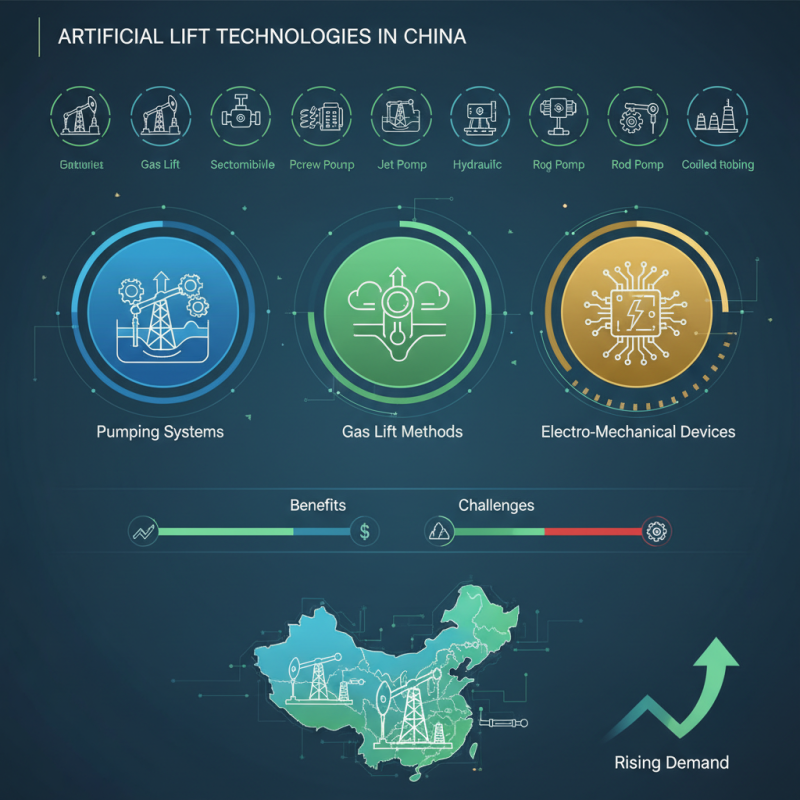
Overview of Artificial Lift Technologies in China
Artificial lift technologies play a crucial role in enhancing oil recovery, particularly in China. The country has rapidly adopted various methods to optimize production from aging fields. Electric submersible pumps (ESPs) are prevalent, often increasing output by 40%. According to industry reports, these systems support over 60% of China's total oil production.
Gas lift is another popular technology. It involves injecting gas to reduce fluid density, improving flow rates. This method is particularly effective in high-pressure reservoirs. However, gas availability can be a challenge, limiting its application in some regions. Implementation requires meticulous planning and resource allocation.
**Tips:** When considering artificial lift options, evaluate reservoir characteristics first. The wrong choice can lead to inefficiencies and increased costs. Regular maintenance is crucial. Neglecting it often results in unplanned downtime and production loss. Continuous training for operators is essential for optimal performance.
Top 10 Artificial Lift Technologies in China
Importance of Artificial Lift in Oil and Gas Production
Artificial lift is crucial in oil and gas production. This technology enhances the flow of hydrocarbons from wells. As reserves deplete, natural flow decreases. That's where artificial lift comes in. It helps maintain production rates when pressure drops. This is essential for maximizing recovery.
In China, several artificial lift technologies are employed. These methods are vital in enhancing efficiency. For instance, gas lift systems can optimize production in challenging environments. However, they require careful maintenance and monitoring. Inefficient systems can result in increased operational costs. The choice of technology must align with specific reservoir conditions.
Despite advancements, many challenges remain. Operators must continually assess performance. Some technologies may not deliver expected results. There’s a need for constant innovation and adaptation. Mistakes in implementation can lead to reduced efficiency and higher expenses. Therefore, understanding these technologies is necessary for success in the industry.
Top 10 Artificial Lift Technologies Used in China
Artificial lift technologies play a crucial role in optimizing oil production in China. With increasing domestic energy demands, these methods help maintain reservoir pressure and enhance extraction efficiency. Recent reports indicate that approximately 70% of oil wells in China utilize some form of artificial lift.
Among the top technologies, beam pumping systems are dominant, accounting for nearly 40% of the market. They are simple and effective but may require regular maintenance. Another prevalent method is electric submersible pumps (ESPs), known for their high efficiency in deep wells. However, installation costs can be significant.
Gas lift systems also hold notable importance, leveraging natural gas to lift oil. This method is versatile but can lead to operational challenges. Recent data suggests that while these technologies increase output, they also face environmental scrutiny. Balancing efficiency and sustainability remains a pressing concern in the industry.
Detailed Examination of Each Technology
In China, artificial lift technologies play a crucial role in enhancing oil production. Each technology brings unique advantages and challenges. According to a 2022 report by the China Petroleum and Chemical Industry Federation, approximately 70% of onshore oil fields utilize some form of artificial lift. This highlights its significance in the industry.
Progressive cavity pumps (PCPs) are among the most popular technologies. They excel in low-output wells, ensuring steady flow. However, they can be sensitive to changes in fluid composition, which sometimes leads to operational issues. Similarly, gas lift systems offer flexibility and efficiency. Yet, their reliance on natural gas can pose supply challenges.
Electric submersible pumps (ESPs) are equally vital. They are capable of handling high flow rates. However, equipment failures can result in costly downtime. Reports suggest that maintenance can account for up to 40% of operating expenses. In addition, rod pumps stand out for their simplicity. Yet, they are less effective in deep wells. This inconsistency demands ongoing assessment and innovation. Each lift method has merits and drawbacks, emphasizing the need for thorough evaluation in application.
Future Trends and Innovations in Artificial Lift in China
Artificial lift technologies in China are evolving rapidly. Recent reports suggest that the country is investing heavily in new solutions. By 2025, the demand for these technologies is expected to grow by over 20%. This creates a space for innovation and development. Emerging technologies such as progressive cavity pumps and gas lift systems are gaining traction. They offer solutions to enhance oil recovery and efficiency.
Currently, the integration of digital technology is a trend to watch. Data analytics and artificial intelligence are streamlining operations. One study indicates that predictive maintenance can reduce downtime by 15%. However, challenges remain. Many companies struggle to implement these advanced technologies. The lack of skilled labor impacts the adoption rate.
Additionally, sustainability is becoming a focal point. As environmental regulations tighten, companies are exploring greener options. In China, the push for cleaner energy sources affects traditional methodologies. While artificial lift remains essential, it must adapt to new standards. This shift may take time and requires careful planning. Balancing efficiency and environmental impact remains a complex issue for the industry.