Choosing the right Dc Planetary Gear Motor is not a matter of matching voltage and speed. It is a sizing decision that affects torque, noise, efficiency, service life, and system safety. A motor may spin correctly on a test bench yet stall when driving a loaded conveyor, valve, medical actuator, or robotic joint. Small details matter, including shaft alignment, duty cycle, gearbox backlash, ambient temperature, and starting torque.
The International Energy Agency reports that electric motor systems consume roughly 40% of global electricity. This makes efficiency more than a marketing claim. It becomes an operating-cost decision. The U.S. Department of Energy also emphasizes correct motor sizing, controls, and maintenance as practical ways to reduce industrial energy use. Meanwhile, market analyses from Grand View Research and MarketsandMarkets show continuing demand for compact gear motors in automation, mobility, and precision equipment. Their forecasts are useful, but market estimates vary by definition and region. Treat them as direction, not proof.
Real selection begins with measurable conditions. Record the continuous load, peak load, required output speed, operating hours, and allowable noise. Check whether the motor starts under load. Confirm the gearbox’s rated torque, reduction ratio, radial-load capacity, and expected backlash. A neat datasheet can still mislead. Temperature rise, lubrication, and repeated reversals may shorten the actual service life. That assumption deserves challenge.
This guide explains how to compare motor voltage, winding speed, planetary stages, encoder options, and protection ratings. It also shows when a cheaper model becomes expensive through heat, downtime, or premature wear. Reliable choices come from calculations, application testing, and evidence from qualified manufacturers—not from torque figures alone.
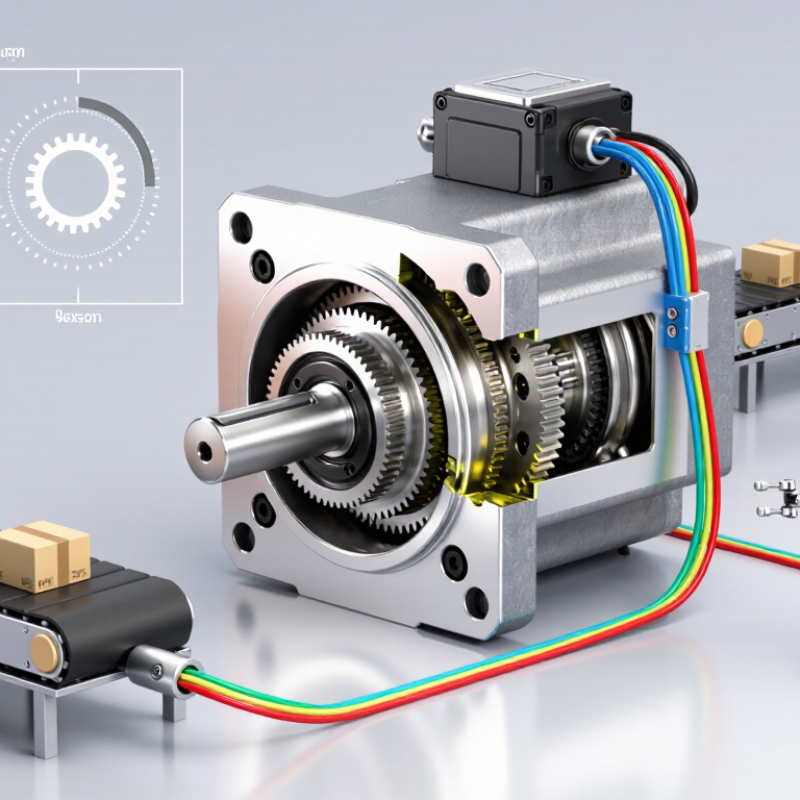
Start by defining the real operating conditions, not the ideal numbers. Record the required output speed, continuous torque, peak torque, and available voltage. A motor lifting 2 kilograms may need much more torque during startup. Measure that moment if possible. Do not rely only on the average load.
Duty cycle matters. State how long the motor runs, how often it reverses, and how frequently it starts. Continuous operation creates heat inside the gearbox and windings. Check the surrounding temperature, dust, moisture, and available installation space. The shaft direction and mounting position also affect the design. In practical testing, a motor can meet its rated speed yet stall under repeated acceleration. A neat spreadsheet can still mislead. Real load testing is worth the effort.
Tips: Leave a reasonable torque margin, but avoid excessive oversizing. A larger motor may draw more current and respond less precisely. Confirm stall current before choosing the controller and wiring. Check gearbox backlash when positioning accuracy matters. Listen for unusual noise during a short endurance test. That small test may reveal poor alignment, overheating, or vibration. Recheck your assumptions.

Choosing a DC planetary gear motor starts with the machine’s real movement requirements. Define the output speed, required torque, and operating voltage before comparing motor specifications. A conveyor may need steady torque at 60 revolutions per minute, while a compact actuator may require brief bursts at a higher load. Gear reduction lowers speed and increases torque, but it also introduces efficiency losses. Do not size the motor by torque alone.
Measure the working load, starting load, and possible overload. The motor should handle continuous torque without overheating. Its peak torque must also cover acceleration and sudden resistance. Calculate power using torque and rotational speed, then check the motor’s duty cycle. A motor running for ten seconds every minute behaves differently from one running continuously. Allow room for friction and imperfect alignment.
Real testing matters.
I have seen designs fail because engineers used an ideal load value. A gearbox can meet the calculation and still struggle under vibration, temperature changes, or frequent reversals. Check shaft speed under load, current draw, noise, and casing temperature during a realistic trial. Also consider gear backlash, shaft strength, and mounting space. A slightly slower motor with better thermal capacity may outperform a faster option. Selection is rarely perfect on paper. Review the assumptions before approving the final motor.
How to Choose the Right DC Planetary Gear Motor?
Select the Gear Ratio and Planetary Gearbox Configuration
Start with the load, speed, and duty cycle. Do not select a ratio from output speed alone. Calculate the required torque at the shaft, including acceleration and friction. A 20:1 ratio may deliver speed, but it can multiply reflected motor inertia and create slower response. The practical target is often a balanced ratio, not the largest ratio available.
Planetary gearbox configuration matters just as much. A single-stage gearbox usually offers lower reduction and better efficiency. Two or three stages provide higher ratios, but they increase length, backlash, heat, and cost. Choose a gearbox with adequate rated torque, not only peak torque. IEA data indicates motor-driven systems consume about 53% of global electricity, so avoid unnecessary transmission losses. Small efficiency changes can become significant during continuous operation.
The U.S. Department of Energy’s Motor Systems Market Assessment reported that motor systems used roughly 68% of manufacturing electricity. That figure makes thermal testing essential. Measure housing temperature after repeated starts, not just during a short bench test. I have seen a motor pass a no-load trial and fail under a real conveyor load. Recheck the calculation. Published efficiency values can also change with speed, lubrication, and mounting position.
Select the gear ratio and planetary gearbox configuration according to the required output speed and torque. The reference model uses a 3,000 rpm, 0.10 N·m DC motor and assumes approximately 90% efficiency per planetary stage.
Higher gear ratios provide greater output torque but reduce output speed. Each additional planetary stage increases torque capacity and ratio range, while cumulative efficiency decreases. Choose the lowest ratio that satisfies the load torque requirement to avoid unnecessary speed loss.
How to Choose the Right DC Planetary Gear Motor?
Size should follow the load, speed, and available installation space. Measure continuous torque, peak torque, and the required output speed. Do not select a motor using stall torque alone. Stall torque can damage gears, windings, or the power supply during repeated starts. A compact motor may fit neatly, yet run hot under constant load. Leave practical clearance for wiring, ventilation, and maintenance. Small details matter.
Efficiency affects battery life, heat, and operating cost. Compare gearbox efficiency at the actual speed and torque, not only the advertised maximum. A higher reduction ratio increases torque but can reduce speed and efficiency. Check the duty cycle carefully. Ten short movements differ greatly from continuous operation. Calculate estimated heat using current and running time. Then test the motor under realistic load. Numbers on paper can mislead.
Materials also shape service life. Hardened steel gears suit demanding loads, while reinforced polymer gears may reduce noise and weight. Check shaft material, bearing design, housing strength, and lubrication compatibility. The operating environment deserves equal attention. Dust, moisture, vibration, and temperature changes can shorten motor life quickly. Select suitable sealing and insulation ratings. Condensation is easy to underestimate. Record startup current, surface temperature, and output speed during testing. If the motor passes only in a clean laboratory, the selection needs more thought.
How to Choose the Right DC Planetary Gear Motor?
Selecting a DC planetary gear motor requires more than checking rated speed and torque. Compare its control features with your actual operating cycle. An encoder can provide accurate position feedback, while current sensing can detect overloads early. Speed control may need a stable driver, especially during repeated starts and stops. Check voltage range, connector layout, noise levels, and available feedback signals before approval.
Reliability depends on heat, load, backlash, and duty cycle. A motor running inside a compact enclosure may exceed its rated temperature after several hours. Ask for life-test data, gear material details, and performance at the required load, not only at peak torque. In practical evaluations, small alignment errors have caused surprising vibration. We once focused too heavily on torque and underestimated gearbox play. That mistake changed our testing checklist.
Tips: Measure the real load first. Record startup current. Test the motor under heat. Compare service intervals, replacement time, and energy use. A lower purchase price may hide expensive controllers or frequent maintenance. Include installation labor, spare motors, and downtime in the total cost. Some specifications remain unclear until testing begins. That is worth questioning.
Comparison of common DC planetary gear motor configurations for low-voltage automation, robotics, medical equipment, and compact motion systems.
| Motor Configuration | Typical Voltage | Continuous Output Torque | Typical Speed Range | Control Features | Feedback and Positioning | Expected Service Life | Reliability Considerations | Relative Purchase Cost | Best-Fit Applications |
|---|---|---|---|---|---|---|---|---|---|
| Brushed DC Motor with Planetary Gearbox | 6–24 VDC | 0.05–2.0 N·m | 20–500 rpm | Simple voltage or PWM speed control; low-complexity drive electronics | Optional Hall-effect encoder; basic speed or position feedback | Approximately 1,000–3,000 operating hours, depending on load and duty cycle | Medium Brush and commutator wear require periodic replacement planning | Low | Valves, pumps, small actuators, consumer devices, and intermittent motion |
| Brushless DC Motor with Planetary Gearbox | 12–48 VDC | 0.1–5.0 N·m | 30–1,000 rpm | Electronic commutation; compatible with six-step or sinusoidal drives; programmable current limits | Hall sensors or incremental encoder; improved speed regulation | Approximately 5,000–20,000 operating hours when properly sized | High No brushes; thermal management and controller quality remain important | Medium | Continuous-duty automation, laboratory equipment, AGVs, and compact robotics |
| BLDC Motor with Integrated Encoder and Driver | 12–48 VDC | 0.1–3.0 N·m | 10–600 rpm | Closed-loop speed control, current limiting, acceleration profiles, and digital configuration | Integrated encoder; suitable for speed and basic position control | Approximately 5,000–15,000 operating hours | High Fewer external components, but electronics require protection from heat and contamination | High | Space-constrained equipment, smart actuators, inspection systems, and OEM products |
| DC Servo Motor with Planetary Gearbox | 12–48 VDC | 0.2–8.0 N·m | 10–800 rpm | Closed-loop position, velocity, and torque control; adjustable current and error limits | High-resolution encoder; supports accurate positioning and repeatability | Approximately 5,000–20,000 operating hours, subject to bearing and gearbox load | High Strong motion performance; requires correct tuning and overload protection | High | Robotic joints, pick-and-place systems, CNC peripherals, and precision actuators |
| High-Ratio Planetary Gear Motor | 12–48 VDC | 1.0–20.0 N·m | 5–150 rpm | Basic PWM control or closed-loop operation; high reduction ratios for low-speed motion | Optional encoder; position resolution depends on encoder count and gear ratio | Approximately 3,000–15,000 operating hours | Medium to High High torque capability, but gear mesh stress and heat must be managed | Medium to High | Lift mechanisms, mobile platforms, powered wheels, and compact linear actuators |
| Sealed Industrial DC Planetary Gear Motor | 12–48 VDC | 0.2–10.0 N·m | 10–400 rpm | Basic PWM or closed-loop control; designed for protected or harsh operating environments | Optional encoder, tachometer, or Hall sensors | Approximately 5,000–20,000 operating hours with suitable maintenance | High Seals, robust bearings, and corrosion-resistant materials improve field durability | High | Outdoor equipment, food-processing machinery, access systems, and industrial conveyors |
Note: Torque, service-life, speed, and cost ranges are typical engineering estimates. Actual performance depends on load profile, gearbox ratio, duty cycle, ambient temperature, lubrication, alignment, controller settings, and required protection rating.
Same Day Shipping
ISO Certified Production