How to Choose Petroleum Coke by Composition?
Choosing petroleum coke starts with composition, not appearance. A shiny black surface can hide high sulfur, metals, or unstable moisture levels. Buyers should examine sulfur, volatile matter, ash, fixed carbon, moisture, vanadium, and nickel. These values affect combustion, emissions, handling, and equipment wear.
Dr. James G. Speight, a recognized petroleum-products authority, states, “The properties of petroleum coke are determined by the feedstock and the coking process.” This principle remains practical at the purchasing stage. Delayed coking conditions can change pore structure, density, and volatile content. Crude oil also leaves a clear chemical fingerprint. Heavy, sour feedstocks often produce coke with higher sulfur and metal concentrations.
Start with the end use. Fuel-grade coke may require controlled sulfur and metal levels. Calcined petroleum coke needs suitable volatile matter and low impurities. Aluminum anode producers usually focus on sulfur, vanadium, nickel, iron, ash, and real density. Small differences matter. A few tenths of a percent can affect furnace behavior or anode performance.
Laboratory data should come from recent, representative samples. Do not rely only on a supplier’s standard sheet. Test cargo-specific material when possible. Review sampling methods, reporting units, and test standards carefully. This is where decisions often become imperfect. One analysis may not represent an entire shipment. Storage can also introduce moisture and handling variation.
The best selection balances chemistry, performance, supply consistency, and total cost. Petroleum Coke Composition is not a single specification. It is a practical risk profile that must match the process.
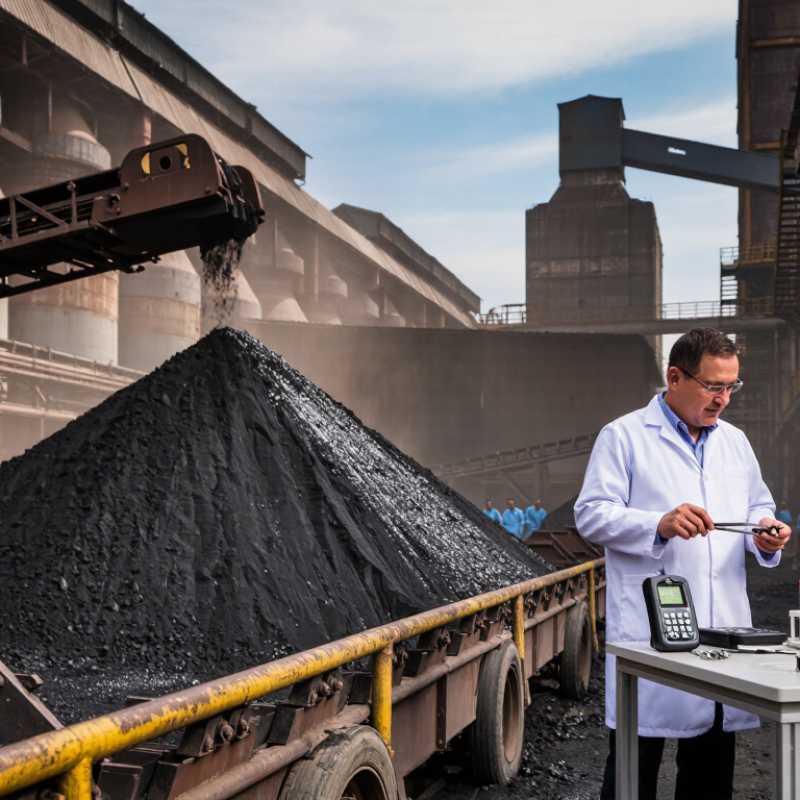
Choosing petroleum coke by composition begins with sulfur, volatile matter, ash, moisture, and fixed carbon. These values affect emissions, handling, heat output, and furnace stability. ASTM D4239 measures sulfur, while ASTM D3174 determines ash. ASTM D346 assesses moisture. Use the same methods for every sample.
The U.S. Energy Information Administration reports that petroleum coke remains a significant refinery by-product, but its composition varies with crude feedstock and conversion severity. A practical screening range is 85–92% fixed carbon, 3–12% volatile matter, and 0.2–8% sulfur. These figures are indicative, not universal specifications. The U.S. Geological Survey also identifies vanadium and nickel as important trace elements in petroleum coke trade and processing.
Look beyond the headline carbon number. High ash can increase residue and reduce usable heat. Elevated vanadium may accelerate refractory wear. Moisture above the contract limit adds transport cost and disturbs feeding. A low-sulfur result can still mislead when metals or ash remain high. I would request recent composite samples, not one scoop from the surface. Check laboratory accreditation, test dates, particle size, and basis reporting. Some certificates use air-dried values; others use as-received values. That difference is easy to miss. It can change purchasing decisions. (Sources: EIA International Energy Statistics; USGS Mineral Commodity Summaries 2024; ASTM petroleum coke testing standards.)

How to Choose Petroleum Coke by Composition?
Choosing petroleum coke by composition starts with its intended use. Define the required performance before comparing laboratory values. Fuel for a cement kiln may accept different sulfur levels than feedstock for carbon anode production. Metallurgical applications may demand low ash and controlled trace metals. Ask practical questions. What furnace temperature is available? How will sulfur be managed? Does the process need stable sizing, high fixed carbon, or easy ignition? Without clear answers, a low-cost cargo can create expensive operating problems.
Review the complete certificate of analysis, not just fixed carbon. Sulfur affects emissions control and product quality. Ash increases residue and reduces usable carbon. Volatile matter influences ignition and handling. Moisture changes delivered weight and feeding stability. Nickel and vanadium may affect high-temperature equipment. Check whether results use an as-received, dry, or dry-basis calculation. Confusing these bases can distort comparisons. Request samples from several loads. One sample is not enough.
Match the composition with a controlled trial. Record feed rate, flame stability, dust behavior, temperature, and final product results. For anode production, examine resistivity, thermal expansion, and impurity behavior after processing. For fuel, monitor heat release and deposits during operation. Laboratory data helps, but plant behavior decides. A single excellent number can mislead. Petroleum coke with suitable chemistry may still perform poorly when moisture or particle size varies. This uncertainty deserves attention. Define acceptance limits, sampling frequency, and corrective actions before purchase.
Choosing petroleum coke by composition starts with its intended furnace, boiler, or calcining route. Sulfur affects emissions, corrosion risk, and final product limits. A low-sulfur grade may cost more, but it can reduce treatment and maintenance demands. Do not judge sulfur from a seller’s average alone. Ask for a recent, lot-specific analysis.
Metals deserve equal attention. Vanadium and nickel can influence catalyst performance, ash behavior, and refractory wear. Iron, calcium, and sodium may also change slag formation. Test representative increments from several shipment points. One scoop can mislead. Ash shows the non-combustible fraction, while moisture lowers delivered heating value and increases handling weight. A wet pile may bridge in feeders during cold or humid weather.
Volatile matter helps indicate ignition behavior and storage characteristics, but it should not be read in isolation. Compare it with fixed carbon, particle size, and operating temperature. Use an independent laboratory when the purchase is large or the source changes. Keep the sampling record, drying method, and test standard with the order documents. Composition sheets are useful, not perfect; sampling errors and uneven blending still occur. Recheck material when furnace flames look unstable, ash deposits increase, or actual consumption differs from the estimate. Small differences matter.
Representative midpoint values for common petroleum coke quality categories. Sulfur, ash, moisture, and volatile matter are shown as weight percentages; nickel plus vanadium is shown in parts per million.
Low-sulfur anode-grade coke generally offers lower sulfur, ash, and metal content, while high-sulfur fuel-grade coke commonly contains higher sulfur and vanadium or nickel. Moisture and volatile matter affect handling, combustion behavior, and calcination requirements. Actual specifications vary by refinery, crude source, and shipment.
Choosing petroleum coke starts with the application, not the lowest quoted price. A fuel user may prioritize fixed carbon, heating value, moisture, and ash. A carbon-anode producer needs consistent sulfur, metals, volatile matter, and particle size. Small composition differences can affect energy use, emissions control, and product quality. Define tolerance limits before requesting samples. That step matters. Use representative samples, not hand-picked lumps.
For cement kilns, sulfur may be manageable when the burner system and gas treatment support it. High vanadium or nickel levels can create operational concerns in some fuel systems. Anode production usually demands controlled sulfur, low metals, stable moisture, and predictable size distribution. Calcined petroleum coke suits applications requiring lower volatile matter and more stable carbon properties. However, calcination does not correct every raw-material weakness.
Review the certificate of analysis, then verify critical values through an independent laboratory using recognized test methods. Check ash, sulfur, metals, moisture, volatile matter, fixed carbon, and heating value. Ask how the supplier samples each shipment. A clean laboratory report can still hide inconsistent cargo blending. Real-world handling also matters; fine particles can increase dust and storage losses. I would avoid choosing from composition alone. Process temperature, equipment limits, fuel blending, and regulatory controls must be considered together. Performance data from a trial batch is often more useful than a perfect spreadsheet.
| Industrial Application | Recommended Coke Form | Total Sulfur (Typical wt%, dry basis) | Ash (Typical wt%) | Volatile Matter (Typical wt%) | Fixed Carbon (Typical wt%) | Key Metal Considerations | Why This Composition Fits the Application |
|---|---|---|---|---|---|---|---|
| Cement kiln fuel | Green petroleum coke | 2.0–6.0 | 0.5–2.0 | 8–14 | 84–92 | Vanadium and nickel are generally tolerated within kiln and product-quality limits; alkalis and chlorides also require control. | High fixed carbon provides useful heat, while moderate volatile matter supports ignition and combustion. Sulfur can be managed through kiln chemistry and operating conditions. |
| Coal-fired power generation and industrial boilers | Green petroleum coke, when permitted by the combustion system and emissions regulations | 2.0–7.0 | 0.5–3.0 | 8–15 | 82–92 | Nickel, vanadium, and sulfur may affect ash behavior, corrosion, particulate control, and emissions performance. | High carbon content and relatively high heating value make it suitable as a solid fuel, but sulfur content must match the plant’s emission-control capability and legal limits. |
| Calcined petroleum coke for prebaked aluminum anodes | Calcined petroleum coke | 1.5–3.5 | 0.2–0.8 | ≤0.5 | Typically ≥98 | Low ash is essential. Nickel, vanadium, calcium, sodium, iron, and silicon should be controlled because they can influence anode quality and aluminum purity. | Calcination removes most volatile matter and moisture, creating a conductive, carbon-rich material with the thermal stability required for anode production. |
| Titanium dioxide production using the chloride process | Low-ash green petroleum coke or suitable calcined coke | Usually ≤3.0, subject to process design | Preferably ≤0.5 | Generally 8–14 for green coke | Typically 85–93 for green coke | Low ash and controlled iron, vanadium, nickel, calcium, and silicon are important because impurities can contaminate the chlorination circuit. | Carbon acts as a reducing agent during chlorination. Low mineral matter helps reduce slag, residue generation, and unwanted contamination. |
| Electrode and carbon-product manufacturing | Low-ash, low-moisture calcined petroleum coke | Commonly 1.0–3.0 | Typically ≤0.5 | ≤0.5 | Typically ≥98 | Low iron, calcium, silicon, sodium, vanadium, and nickel are preferred for electrical, thermal, and mechanical consistency. | Low ash and low volatile matter support stable electrical conductivity, controlled baking behavior, and reduced gas evolution during processing. |
| Recarburizer for steelmaking and foundry operations | Calcined petroleum coke or graphite-like carbon material | Usually 0.5–3.0 | Typically ≤1.0 | ≤1.0 | Typically ≥97 | Low nitrogen, low hydrogen, and low metallic impurities are desirable when strict steel chemistry is required. | High fixed carbon efficiently raises molten-metal carbon content while low volatile matter reduces fumes, spattering, and unwanted gas pickup. |
| Sulfur-sensitive fuel systems | Low-sulfur green petroleum coke | Preferably ≤2.0 | 0.5–2.0 | 8–14 | 85–93 | Vanadium, nickel, and ash should be reviewed together with sulfur because they may contribute to high-temperature fouling and corrosion. | Lower sulfur reduces sulfur dioxide emissions and limits sulfur-related operational issues, provided the fuel system can burn the selected grade efficiently. |
| General carbonaceous reductant and metallurgical processing | Green or calcined petroleum coke, depending on furnace temperature and process requirements | 1.0–6.0 | 0.5–3.0 | 0.5–14 | 85–99 | Selection depends on the permitted levels of sulfur, phosphorus, iron, silicon, vanadium, and nickel in the final product. | Green coke offers lower cost and useful reactivity, while calcined coke provides higher fixed carbon, lower volatile matter, and more stable furnace performance. |
Choosing petroleum coke by appearance alone is risky. Composition must be verified through testing and supplier documentation. The U.S. Geological Survey’s Mineral Commodity Summaries 2024 identifies sulfur and trace metals as important quality variables. These values affect combustion, emissions control, and downstream equipment wear.
Request a recent certificate of analysis for every shipment. Check sulfur, volatile matter, ash, moisture, fixed carbon, vanadium, nickel, and heating value. Then compare the certificate with an independent laboratory report. ASTM-based methods are commonly used for sulfur, proximate analysis, and trace metals.
The U.S. Energy Information Administration’s refinery data treats petroleum coke as a distinct refinery product, representing roughly 5% of refinery output in recent U.S. reporting. That scale explains why quality can vary between refineries and cargoes.
Sampling deserves equal attention. A bright, dry surface proves very little. Collect increments from different points, because moisture and fines may settle unevenly. Keep the sample sealed, labeled, and linked to the shipment number. Supplier documents should include production date, origin, test methods, laboratory identity, and tolerance limits. A certificate without method details is weak evidence. I would not accept a single old report as current proof. Storage conditions can change moisture and handling behavior, while blending can alter sulfur and metal levels. Re-test when the values sit close to your operating limit. Small differences matter.
Same Day Shipping
ISO Certified Production