How to Choose Insulating FRP Profiles in 2026?
Choosing Insulating FRP Profiles in 2026 requires more than comparing tensile strength or purchasing the lowest quotation. These profiles support electrical cabinets, switchgear, rail systems, platforms, and renewable-energy equipment. Their real performance depends on resin chemistry, glass-fiber direction, moisture exposure, temperature changes, and installation quality. A profile that performs well indoors may age quickly beside salt spray or ultraviolet light.
Composite engineer Leonard Hollaway offers a useful reminder: “FRP design must begin with the service environment.” This principle remains highly practical. Buyers should examine dielectric strength, surface resistivity, fire behavior, thermal expansion, dimensional tolerance, and resistance to chemicals. They should also request test reports, traceability records, and clear information about manufacturing standards. A polished datasheet is not enough.
Small details matter.
For example, a 40-millimeter channel may carry a cable tray safely under static loading. However, repeated vibration can create stress around drilled holes and joints. Resin-rich edges may appear smooth, yet they can hide inconsistent fiber distribution. That possibility deserves attention. It is easy to focus on maximum load while overlooking creepage distance, condensation, or maintenance access.
This guide explains how to compare Insulating FRP Profiles with greater confidence in 2026. It considers material selection, electrical safety, structural design, environmental exposure, certification, supplier experience, and lifecycle cost. No single profile is ideal everywhere. The better choice is the one supported by tested data, realistic service conditions, and a design review that welcomes uncomfortable questions.
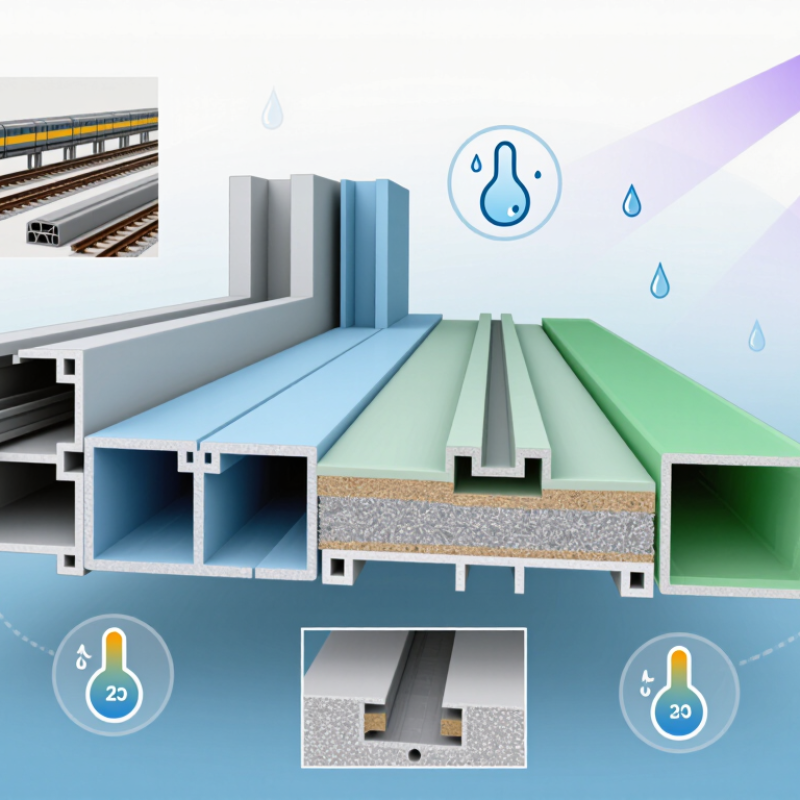
What Are Insulating FRP Profiles and Where Are They Used?
Insulating FRP profiles are structural shapes made from fiber-reinforced polymer composites. They combine glass fibers with a resin matrix, creating strong, lightweight, electrically insulating components. Common forms include angles, channels, tubes, rods, and custom sections. Unlike metal, FRP does not readily conduct electricity or corrode from moisture. That difference matters.
These profiles appear in electrical substations, switchgear rooms, rail systems, and renewable-energy installations. Technicians use them for support frames, cable brackets, busbar supports, access platforms, and equipment guards. In a coastal substation, for example, an FRP channel can support cables above a damp concrete floor without rusting. It can also reduce magnetic interference around sensitive equipment. Utility tunnels and wastewater facilities benefit from the same properties.
Choosing a profile requires more than checking its dimensions. Review voltage exposure, temperature range, flame behavior, mechanical loads, and installation conditions. A pultruded section may suit straight, repeated supports, while a molded component may handle complex connections better. Surface texture is important near wet walkways. Smooth profiles can become slippery, although aggressive textures may trap dirt. This trade-off is easy to overlook.
Ask for test data, dimensional tolerances, and batch traceability. Verify insulation performance under realistic humidity and contamination conditions. Cutting dust also requires controlled work practices and suitable protective equipment. In practice, design assumptions are sometimes too optimistic. A profile that performs well indoors may need different resin protection outdoors. The specification should reflect the actual site, not an ideal laboratory.
Which Electrical and Mechanical Properties Should You Evaluate?
How to Choose Insulating FRP Profiles in 2026?
Choosing an insulating FRP profile requires more than checking its voltage rating. Evaluate dielectric strength, insulation resistance, and surface tracking resistance under realistic conditions. A dry laboratory result may change after moisture, heat, dust, and repeated electrical stress. For outdoor equipment, review resistance to ultraviolet exposure and water absorption. Ask for test methods, sample conditioning, and production tolerances. Without this evidence, comparison becomes guesswork.
Mechanical performance deserves equal attention. Check tensile, flexural, compressive, and impact strength for the actual profile direction. Pultruded fibers usually create different properties along and across the profile. Review creep under constant load, fatigue during vibration, and dimensional stability across temperature changes. A support that looks rigid may slowly deflect beside a warm busbar. I have seen selections fail because engineers considered peak load but ignored long-term deflection. That mistake is easy to repeat.
Tips
Match the test temperature to the installation environment. Request samples with the proposed resin, fiber content, and surface finish. Inspect cut edges, holes, and fastening zones, not only the untouched profile. Compare safety margins, but question unrealistic ones. No datasheet answers everything. Where results conflict, involve an independent laboratory and verify the latest applicable electrical and mechanical standards before approval.
How Do Environmental Conditions Affect FRP Profile Selection?
How to Choose Insulating FRP Profiles in 2026?
Environmental conditions can change how an insulating FRP profile performs over time. A suitable profile must match the site, not only the electrical rating. Begin with sunlight, humidity, temperature, chemicals, and mechanical loading. These factors often interact in difficult ways.
Outdoor installations face ultraviolet exposure, rain, wind, and repeated temperature changes. Continuous sunlight may weaken the resin surface and cause color fading or fine cracks. A UV-resistant resin system and protective surface finish can reduce this risk. Moisture is equally important. Water may enter through cut ends, drilled holes, or damaged coatings. Proper sealing and drainage should be checked during installation. Salt spray and industrial chemicals require additional chemical-resistance data. Never rely on a general statement such as “corrosion resistant.”
Temperature deserves careful attention. High heat can reduce strength and accelerate creep under constant load. Low temperatures may make some resin systems less tolerant of impact. Review the profile’s service-temperature range, dimensional stability, and dielectric performance under humidity. Fire behavior may also matter in enclosed electrical spaces. Request traceable test reports, production records, and installation guidance from qualified suppliers. Site inspection is valuable, but it is not perfect. I have seen designs fail because real exposure was more severe than the original specification. Rechecking assumptions before purchase can prevent costly replacement.
How Environmental Conditions Affect FRP Profile Selection in 2026
Representative maximum continuous service temperatures for common FRP resin systems
Temperature is one of the key environmental factors in FRP profile selection. Typical continuous service limits are approximately 80°C for polyester, 105°C for vinyl ester, and 120°C for epoxy systems. For outdoor, humid, immersed, or chemically aggressive environments, also evaluate UV protection, moisture resistance, chemical compatibility, thermal cycling, and mechanical load retention. Actual limits depend on the formulation, fiber architecture, cure quality, and exposure conditions.
Typical engineering values shown for preliminary selection only; verify final limits with project-specific testing and applicable standards.
How Can You Compare Manufacturing Quality and Compliance?
How to Choose Insulating FRP Profiles in 2026?
When comparing insulating FRP profiles, examine the manufacturing process, not only the sales specification. In factory audits, I check fiber alignment, resin wet-out, die temperature, and pulling speed. These details affect strength, insulation, and dimensional stability. A clean surface is useful, but it does not prove internal quality. Cut samples should show few voids, consistent glass distribution, and no dry fiber patches.
Ask for batch records, inspection plans, and traceability codes. Compare dimensional tolerances across several production lots, not one perfect sample. Measure wall thickness, straightness, and hole positions with calibrated tools. Request dielectric strength, water absorption, tensile, and heat-aging results from an independent laboratory. Testing conditions matter. A strong number without temperature, specimen size, or conditioning data is difficult to trust.
Compliance needs careful reading. Check whether the profile matches the required electrical, mechanical, fire, and environmental standards for its intended use. Confirm the standard edition, test method, laboratory competence, and certificate scope. A certificate alone can mislead. I have seen documents covering a resin sample rather than the finished profile. That difference is easy to miss. Ask how production changes are controlled, and whether failed batches remain traceable. No supplier is perfect. The useful question is how openly the supplier records mistakes, corrective actions, and retesting.