Choosing the right Battery Operated Internal Welder in 2026 requires more than comparing prices and battery capacity. Field experience shows that confined pipe repairs demand steady control, dependable power, and equipment that fits the working space. A machine may look impressive online, yet feel awkward inside a narrow pipe.
This guide examines practical details that affect real welding performance. We will consider battery runtime, charging systems, electrode compatibility, welding current, cable reach, weight, and operator controls. Site conditions matter too. Dust, moisture, poor lighting, and limited ventilation can quickly expose weak design choices. A comfortable handle and clear display may save more time than an extra feature.
Safety remains essential.
Reliable selection also depends on evidence. Check manufacturer specifications, service support, user documentation, and relevant workplace requirements before purchasing. Experienced welders should verify whether the unit suits the metal type, joint design, and expected repair schedule. A compact welder is not automatically the best welder. That assumption deserves challenge.
Battery technology continues to improve, but performance claims can vary with temperature, load, and battery age. Therefore, this article will separate useful specifications from marketing language. It will also identify compromises that buyers sometimes overlook, including recharge delays and replacement battery costs. The goal is not to recommend one universal model. Instead, it offers a practical framework for making a safer, more informed decision in 2026.
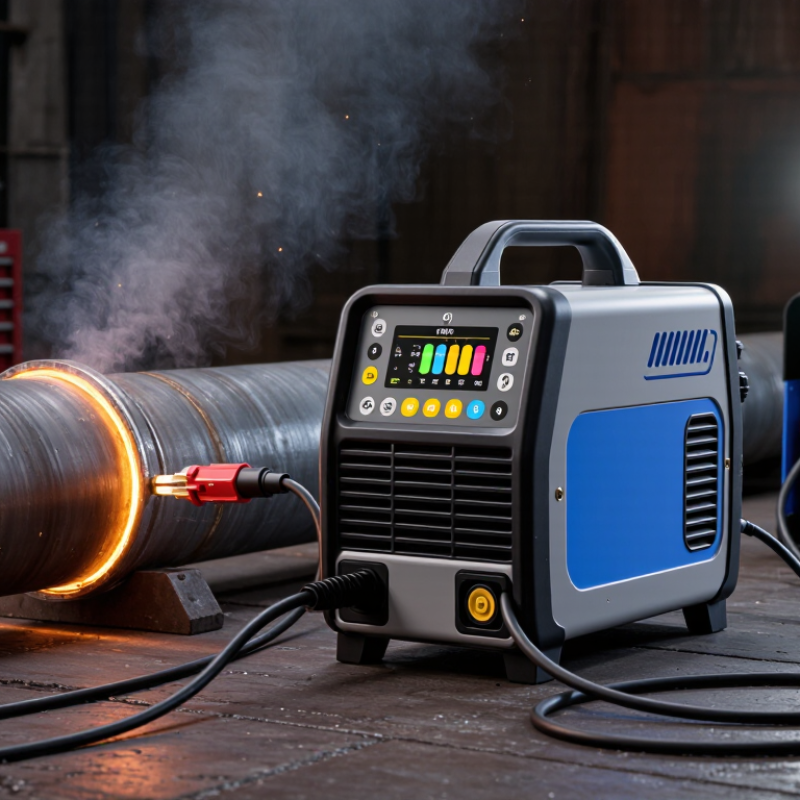
A battery operated internal welder is a compact welding system designed to work inside pipes, tubes, or enclosed metal sections. Its battery supplies power to the welding controls, drive wheels, sensors, and sometimes the welding arc. The exact design varies. Some units weld circumferential joints, while others perform internal repairs or controlled seam work. It is not simply a smaller handheld welder.
The machine usually enters through an access opening and travels along the internal surface. Operators guide it with a pendant, remote controller, or programmed system. A stable frame matters. It keeps the electrode or torch aligned while the wheels pass over dust, scale, or slight unevenness. In practical inspections, poor alignment causes more defects than low travel speed. Battery capacity also affects performance. Heat, cable resistance, and repeated starts can reduce operating time.
Check the pipe diameter range, welding process, battery runtime, charging time, and emergency stop function. Confirm whether the unit supports continuous welding or only short repair cycles. Ventilation and gas management still require careful planning inside enclosed spaces. Battery power does not remove those hazards. That assumption is easy to make, and often wrong. The machine should also provide clear status signals, secure traction, and recorded welding parameters. A poorly balanced unit may look efficient on a workbench but struggle inside a damp, curved pipe. Field conditions are less forgiving.

How Battery Operated Internal Welding Systems Work
A battery operated internal welder places the carriage, control unit, and welding head inside a pipe or vessel. The battery powers travel motors, sensors, lighting, and digital controls. Some systems also provide arc power through an inverter. Others use a separate welding source and battery-powered movement. That distinction matters.
During operation, drive wheels maintain steady movement along the internal wall. A torch or electrode holder follows a programmed path. Sensors help control travel speed, torch position, and joint alignment. Shielding gas protects the molten pool from contamination. In field testing, operators should check voltage drop, battery temperature, cable length, and ventilation before welding begins.
The International Energy Agency reported that global battery demand for electric vehicles exceeded 750 GWh in 2023. This growth is improving battery cells, monitoring systems, and thermal management. However, industrial welders face harsher conditions than passenger vehicles. Dust, heat, vibration, and restricted access can reduce real-world runtime. Real sites are less tidy.
The American Welding Society and Emsi estimate that the United States may need about 330,000 new welding professionals by 2028. Simpler controls can reduce training pressure, but automation does not remove inspection responsibilities. A practical buyer should compare duty cycle, usable battery capacity, recharge time, emergency retrieval, and weld-record storage. Marketing figures can be optimistic. Measure performance on the actual pipe material, diameter, and joint geometry before committing.
How Battery Operated Internal Welding Systems Work
The values are engineering reference figures for equipment selection rather than company or brand specifications. Actual power demand depends on welding current, duty cycle, pipe diameter, travel speed, battery condition, and auxiliary equipment. For a 2.0 kWh battery, a 730 W active load provides approximately 2.3 hours of theoretical operation before conversion and reserve losses; practical runtime is lower.
Before buying, compare output stability, not just peak amperage. A compact internal welder may advertise 200 amps, yet its duty cycle can fall sharply at higher loads. Check the rated duty cycle at your actual current and ambient temperature. A 60% duty cycle means six minutes of welding within a ten-minute period. That difference matters inside a long pipe.
Battery specifications deserve equal attention. The IEA’s Batteries and Secure Energy Transitions report states that global battery manufacturing capacity exceeded 2.5 TWh in 2023. Capacity is growing, but practical runtime still depends on chemistry, temperature, cable length, and welding position. Compare watt-hours, recharge time, replaceable packs, and low-charge output behavior. A 1,000-watt-hour battery is easier to compare than amp-hour figures alone. Test it cold, if possible. Real sites are messier.
Select wire diameter, feed speed, welding process, and torch reach around the joint design. Verify the machine’s operating range against your approved welding procedure. Also inspect weight, balance, cooling, thermal protection, enclosure rating, and emergency controls. IEC 60529 ingress ratings help describe dust and water resistance, but they do not prove weld quality. The American Welding Society has projected a need for about 330,000 additional welding professionals in the United States by 2028. Clear controls can reduce training friction, though they cannot replace qualification. I would not trust the biggest amp number. I would trust repeatable tests, serviceable batteries, and recorded weld results.
How to Choose a Battery Operated Internal Welder in 2026?
Match the welder to the application before comparing battery capacity. For internal pipe repairs, check access diameter, joint position, material thickness, and required welding process. A narrow chamber may need a compact torch, flexible lead, and precise low-current control. A 6-inch pipe is not simply a smaller version of a 24-inch pipe.
For field work, calculate real duty time. The IEA’s Global EV Outlook 2024 reported a 14% fall in battery pack prices during 2023. However, cheaper batteries do not guarantee longer welding runtime. Heat, cable length, electrode size, and repeated starts can reduce output. Test the machine with the actual electrode and metal thickness. Do not trust only the advertised amp-hour figure.
The U.S. Bureau of Labor Statistics projects about 2% employment growth for welders, cutters, solderers, and brazers from 2023 to 2033. That modest outlook makes productivity important, but speed should not replace weld quality. Choose a model with stable arc control, visible charge information, and protection against overheating. For stainless pipe, prioritize controlled amperage and clean shielding. For carbon-steel maintenance, portability and fast setup may matter more. I once underestimated access space and selected a powerful unit that was awkward inside the pipe. The mistake was expensive. Small details decide the match.
| Welding Application | Typical Pipe or Joint Size | Common Material and Thickness | Recommended Welding Process | Suggested Output Range | Useful Battery Capacity | Target Operating Time | Selection Priorities |
|---|---|---|---|---|---|---|---|
| Small-diameter maintenance pipes | DN25–DN80 (1–3 in) | Carbon steel or stainless steel 1.5–4 mm wall | Short-arc GMAW or GTAW | 40–140 A 16–20 V for GMAW | 0.8–1.5 kWh | 30–60 minutes of arc-on work | Compact torch, low minimum current, precise wire feeding, and easy access in confined spaces. |
| General pipe fabrication | DN80–DN200 (3–8 in) | Carbon steel 3–8 mm wall | GMAW with solid wire or FCAW | 90–220 A 18–25 V | 1.5–3.0 kWh | 45–90 minutes of arc-on work | Adjustable voltage and wire speed, stable arc control, and a duty cycle of approximately 35–60%. |
| Stainless-steel pipe interiors | DN50–DN150 (2–6 in) | Austenitic stainless steel 1.5–6 mm wall | GTAW for root quality; GMAW for fill passes | 35–180 A | 1.0–2.5 kWh | 30–75 minutes of arc-on work | Stable low-current operation, gas-flow control, reduced spatter, and compatibility with stainless filler metals. |
| Field repair of carbon-steel pipelines | DN150–DN500 (6–20 in) | Carbon or low-alloy steel 6–16 mm wall | FCAW or GMAW; SMAW where wire access is difficult | 120–280 A 20–30 V | 2.0–4.0 kWh | 45–90 minutes of arc-on work | High peak current, strong cooling, impact-resistant housing, and reliable operation away from mains power. |
| Root-pass welding on open-root joints | DN80–DN300 (3–12 in) | Carbon steel or low-alloy steel 4–12 mm wall | GTAW or controlled short-circuit GMAW | 50–180 A | 1.5–3.0 kWh | 30–60 minutes of arc-on work | Fine current adjustment, arc-start control, crater-fill function, and consistent shielding-gas delivery. |
| Structural brackets and supports inside vessels | Access openings of approximately 450–900 mm | Carbon steel 4–12 mm plate or section | GMAW or FCAW | 100–250 A 19–28 V | 2.0–3.5 kWh | 40–80 minutes of arc-on work | Short torch lead, remote controls, low equipment weight, ventilation compatibility, and overload protection. |
| Aluminum pipe and light-alloy repairs | DN50–DN200 (2–8 in) | Aluminum alloys 2–8 mm wall | Pulse GMAW or AC GTAW | 80–250 A 18–28 V | 2.0–4.0 kWh | 30–70 minutes of arc-on work | Pulse capability, high wire-feed quality, spool-gun or push-pull compatibility, and effective heat management. |
| Long-duration remote-site work | Mixed pipe and fabrication sizes | Carbon steel, stainless steel, or low-alloy steel 2–16 mm wall | GMAW, FCAW, GTAW, or multi-process equipment | 40–280 A | 4.0–8.0 kWh using swappable battery packs | 2–4 hours with spare packs and planned charging | Swappable batteries, fast charging, battery state-of-charge display, generator or solar charging options, and serviceable components. |
| Outdoor work in dusty or damp areas | Application-dependent | Application-dependent | GMAW, FCAW, or SMAW according to joint design | 80–250 A | 2.0–4.0 kWh | 45–90 minutes of arc-on work | Ingress protection appropriate to the site, sealed controls, thermal protection, mechanical guards, and a stable ground connection. |
Safety should guide every purchase. Choose a unit with clear battery indicators, insulated controls, and dependable emergency shutdown features. Internal welding creates restricted access, so ventilation and remote monitoring deserve serious attention. Confirm that the welder fits the pipe diameter and working position. A lighter tool may reduce fatigue, but poor balance can still cause shaky welds. Qualified operators should inspect cables, electrode holders, grounding points, and protective equipment before each shift. Follow the operating manual, even when the job appears routine.
Tips: Keep batteries away from heat and moisture. Charge them in a ventilated area. Label each battery by purchase date. Remove damaged packs immediately. Never rely only on the display; check unusual heat, smell, or reduced runtime. A short pre-work checklist prevents expensive mistakes.
Long-term ownership depends on maintenance habits, not purchase price alone. Clean contact points after dusty work, and store the welder in a dry, padded case. Schedule professional inspections when insulation, controls, or battery performance changes. Battery capacity will decline, sometimes earlier than expected. Keep service records, including weld hours and replacement parts. This makes future faults easier to trace. No checklist is perfect. Operators should review it after near misses, because small oversights can become costly failures.
Same Day Shipping
ISO Certified Production