Choosing a 3 Ton Pallet Truck in 2026 requires more than checking its maximum load rating. Warehouse floors, pallet conditions, travel distance, and operator habits all affect daily performance. A truck that moves three tons on paper may feel unstable on uneven concrete. It may also become difficult to steer in narrow aisles.
This guide examines practical factors used by warehouse managers, equipment technicians, and experienced operators. It considers fork dimensions, frame strength, steering effort, wheel materials, braking options, and maintenance access. For example, polyurethane wheels usually suit smooth indoor floors, while nylon wheels may tolerate heavier loads and rougher surfaces. The correct fork length also matters. Oversized forks can strike racking, pallets, or nearby workers.
Safety should remain central. Buyers should review the manufacturer’s rated capacity, operating instructions, inspection procedures, and applicable workplace requirements. A reliable supplier should provide clear technical data, warranty terms, replacement parts, and service support. These details often matter more than a low purchase price.
Real-world testing is valuable. Walk the truck through a loaded aisle. Check turning clearance. Listen for unusual wheel noise. A short demonstration can reveal problems that a product sheet hides.
There is no perfect choice. Some buyers may overestimate future capacity and pay for unnecessary features. Others may focus on price and overlook repair delays. By comparing measurable requirements with actual working conditions, this guide helps readers select a safer, more durable, and more efficient 3 Ton Pallet Truck for 2026.
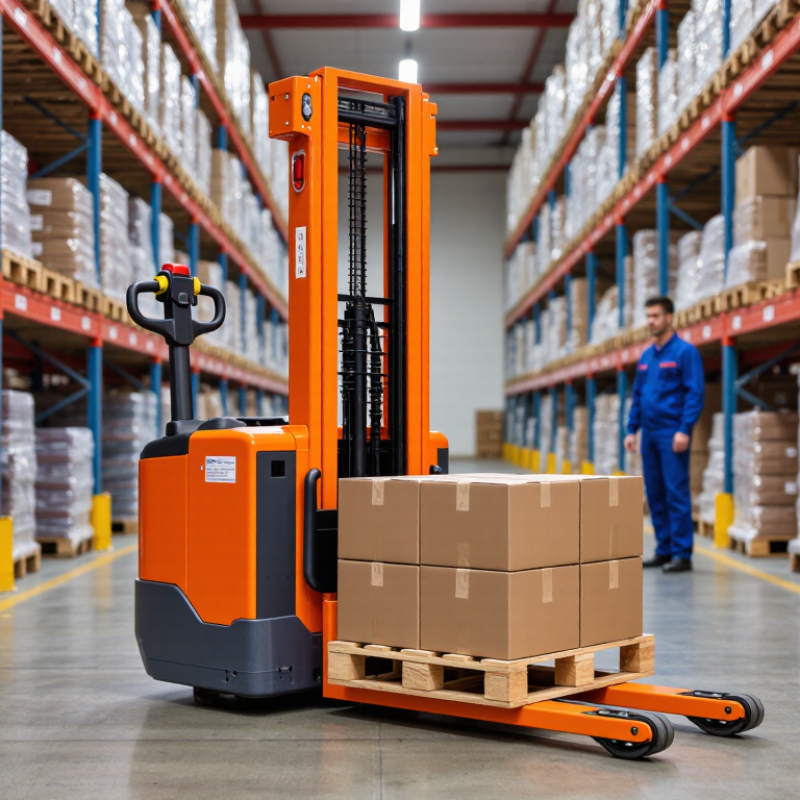
A 3-ton pallet truck is designed to move loads up to 3,000 kilograms, or about 6,614 pounds. Its rated capacity depends on the load center, pallet condition, floor quality, and operating angle. The number alone does not tell the whole story. A dense machine part may shift the center of gravity forward. That can reduce practical capacity.
Its rated capacity depends on the load center, pallet condition, floor quality, and operating angle.
These trucks are common in manufacturing plants, distribution centers, building-material warehouses, and busy receiving bays. They handle loaded pallets between storage areas, dock doors, production lines, and staging zones. In a real warehouse, operators often travel only short distances. However, repeated starts, ramps, narrow aisles, and uneven joints can place greater stress on wheels and brakes.
Safety matters more than maximum capacity. The U.S. Occupational Safety and Health Administration reports that powered industrial trucks are linked to about 35,000 serious injuries and 85 fatal injuries annually. Its standard, 29 CFR 1910.178, requires visible capacity information and trained operators. The 2024 MHI Annual Industry Report also found that 55% of supply-chain leaders increased technology investment, showing stronger attention to equipment productivity and control. Still, automation does not remove basic risks. A three-ton rating may look reassuring. It can be misleading without load-center calculations, inspection records, and actual floor testing.

Choosing a 3-ton pallet truck starts with the real load, not the label. A 3,000-kilogram rating may depend on the load center, lift height, and attachment. Measure the heaviest pallet, its center of gravity, and how evenly weight is distributed. OSHA’s powered industrial truck guidance requires visible capacity information and operator training. Treat those requirements as practical safeguards, not paperwork.
Pallet design changes the decision. ISO 6780 identifies common pallet dimensions, including 1,200 × 800 millimeters and 1,219 × 1,016 millimeters. Check entry openings, deck-board strength, and underside clearance before selecting fork length. Narrow openings can create dangerous contact. Reusable pallets may also arrive damaged. That detail is easy to miss.
Operating conditions deserve equal attention. Concrete floors, loading ramps, cold rooms, dust, and frequent reversing all affect performance. MHI’s 2024 Annual Industry Report found that 88% of surveyed supply-chain professionals planned to increase technology investment. That trend does not remove the need for a simple site trial. Test steering effort, braking, turning space, and battery endurance with the actual pallet. A calculation can still be wrong. I would also question a 3-ton choice if most loads weigh 800 kilograms; excessive capacity can add cost and reduce maneuverability.
Choosing a 3-ton pallet truck in 2026 depends on workload, travel distance, and weighing needs. Manual models suit short moves, occasional loading, and smooth warehouse floors. They cost less and remain easy to inspect. However, pushing 3,000 kilograms repeatedly can quickly strain operators. That hidden labor cost is often underestimated.
Electric pallet trucks fit busy facilities with long travel routes or frequent lifting. Battery capacity, charging time, turning radius, and service access deserve careful checks. A compact truck may maneuver well between racks but feel unstable with an uneven load. Test it with the actual pallet dimensions, not only an empty unit. Noise levels also matter near offices or shared work areas.
Weighing pallet trucks combine material handling and weight recording. They can reduce trips to a separate scale, especially during receiving and dispatch. Yet scale accuracy depends on floor conditions, load balance, battery status, and regular calibration. Do not assume the display stays precise forever. Manual weighing trucks may be adequate for occasional checks, while electric weighing models support heavier daily workflows. A practical trial should measure speed, operator fatigue, weighing consistency, and downtime over several shifts. Sometimes the most advanced option is simply too complicated for a small team.
A 3 ton pallet truck should match your real load, not only its advertised rating. Check the 3,000-kilogram capacity at the correct load center. Loads placed too far forward can reduce safe handling. Measure pallet openings, fork length, fork width, and overall height. The truck must enter pallets smoothly without scraping stringers or damaging goods. Record the narrowest aisle and turning space. Small measurement errors matter.
Safety features deserve close inspection. Choose a model with reliable braking, controlled lowering, and comfortable handle positioning. Rounded edges can reduce injuries during busy shifts. Check whether the steering angle suits your warehouse layout. Test the release lever with gloves. It should feel clear, not stiff or vague. Keep it practical.
Build quality affects daily reliability. Examine welds, frame thickness, wheel material, hydraulic seals, and corrosion protection. Roll the truck over uneven flooring and listen for unusual noise. A quiet test is useful. Ask for maintenance guidance and replacement-part availability. A heavier frame is not automatically better; it may increase operator fatigue. I would recheck every measurement before ordering, because a seemingly minor mismatch can create repeated handling problems. Some decisions remain imperfect, especially when floor conditions, pallet quality, and operator habits change.
How to Choose a 3 Ton Pallet Truck in 2026?
Evaluate total cost, maintenance needs, and supplier support before comparing purchase prices. A 3 ton pallet truck may move heavy loads, but floor quality, travel distance, and daily cycles change its real cost. Record the number of lifts, wheel replacements, charging hours, and operator complaints for one month. That simple log is often more useful than a polished quotation.
MHI’s 2024 Annual Industry Report found that 83% of supply chain professionals planned to increase technology investment within two years. That figure supports a practical question: can the supplier provide service data, training, and replacement parts quickly? Ask for a five-year total-cost estimate covering batteries, wheels, forks, inspections, labor, and downtime. A cheaper unit becomes expensive when a small wheel failure stops a loading bay for half a day.
Maintenance details matter. Check whether technicians can inspect hydraulic seals, steering joints, brakes, and battery connectors without specialized tools. Request documented inspection intervals and realistic parts lead times. ISO 3691-5 provides safety guidance for pedestrian-propelled trucks, so supplier training should match the equipment’s operating risks. Some vendors promise fast support but give no response-time commitment. I have seen that gap become costly. Get it written.
Deloitte’s 2024 Smart Manufacturing and Operations Survey reported that 86% of manufacturers viewed smart manufacturing as important for competitiveness. For a pallet truck, “smart” can mean simple hour meters, fault records, and battery tracking—not unnecessary complexity. Choose measurable support over impressive features.
| Evaluation Dimension | Manual 3 Ton Pallet Truck | Electric Walkie 3 Ton Pallet Truck | Electric Platform-Rider 3 Ton Pallet Truck |
|---|---|---|---|
| Rated capacity | 3,000 kg / 6,600 lb | 3,000 kg / 6,600 lb | 3,000 kg / 6,600 lb |
| Typical purchase price in 2026 | US$900–1,800 | US$6,500–12,000, including battery and charger | US$10,000–20,000, including battery and charger |
| Best operating environment | Short-distance movement, low daily volume, smooth floors | Loading docks, warehouses, and frequent pallet movement | Long travel distances, high throughput, and multi-shift operations |
| Recommended daily pallet moves | Up to approximately 30–50 | Approximately 50–150 | Approximately 120–250+ |
| Typical travel speed | Operator-dependent; usually under 4 km/h | Approximately 4.5–6 km/h | Approximately 7–10 km/h |
| Battery requirement | None | 24 V or 48 V battery; lead-acid or lithium-ion | 24 V or 48 V higher-capacity battery; lithium-ion is common for intensive use |
| Estimated electricity cost per year | US$0 | Approximately US$150–350 | Approximately US$300–750 |
| Routine maintenance cost per year | Approximately US$150–300 | Approximately US$500–900 | Approximately US$900–1,600 |
| Main wear components | Wheels, pump seals, steering linkage, hydraulic oil | Drive wheel, load rollers, forks, hydraulic seals, battery connectors | Drive wheel, load rollers, brakes, steering controls, battery, hydraulic system |
| Typical battery replacement interval | Not applicable | Lead-acid: approximately 3–5 years; lithium-ion: approximately 5–8 years | Lead-acid: approximately 3–5 years; lithium-ion: approximately 5–8 years |
| Estimated battery replacement cost | Not applicable | US$1,200–3,500, depending on chemistry and capacity | US$2,000–5,000, depending on chemistry and capacity |
| Operator training requirement | Basic site-specific instruction | Documented powered-industrial-truck training and evaluation | Documented powered-industrial-truck training, including rider controls |
| Typical service response target to request | Parts shipment within 2–5 business days | Technician response within 24–72 hours | Technician response within 24–48 hours, with emergency support available |
| Parts availability target | Common mechanical parts stocked regionally | Critical electrical and mechanical parts available within 3–7 business days | Critical parts and battery support available within 1–5 business days |
| Typical warranty to verify in the quotation | 12–24 months | 12–24 months for the truck; separate battery terms may apply | 12–24 months for the truck; separate battery terms may apply |
| Estimated five-year ownership cost* | US$1,650–3,300 | US$10,000–19,750 | US$16,000–33,750 |
| Most suitable choice | Lowest capital cost and simple maintenance when labor demand is limited | Balanced option for regular warehouse work and moderate operating intensity | Highest productivity for long distances, heavy traffic, and multiple shifts |
| Cost assumptions: Indicative 2026 planning ranges in U.S. dollars. Five-year ownership cost includes purchase price, routine maintenance for five years, estimated electricity for five years, and one potential battery replacement where applicable. It excludes operator labor, financing, taxes, shipping, site modifications, downtime losses, and accident-related repairs. Actual costs depend on duty cycle, floor condition, battery chemistry, local electricity rates, and service coverage. | |||
Same Day Shipping
ISO Certified Production