Choosing the best Drum Chipper in 2026 starts with the material you actually process. Fresh branches, dry hardwood, and mixed woody waste place different demands on a machine. A wide feed opening may save time with bulky limbs, while rotor design and knife condition influence chip consistency. Bigger is not automatically better.
Forestry researcher Dr. Raffaele Spinelli has studied forest biomass operations and equipment performance. A practical takeaway from that body of work—not a verbatim quotation—is: “Match the machine’s capacity to the material and the work system around it.” That distinction matters. A chipper rated for high hourly output may disappoint if the loader, crew, or site cannot keep it supplied. Real-world productivity depends on the whole setup.
This guide compares feed capacity, power source, chip quality, mobility, maintenance access, safety features, and dealer support. Look closely at the details: Can operators reach service points without awkward disassembly? Are replacement knives available nearby? Will the machine fit the roads and turning space at your site? These questions are less exciting than horsepower, but they often shape ownership costs. Some trade-offs remain. A compact model may be easier to move, yet slower with heavy material. No brochure can resolve every job-specific uncertainty. The right Drum Chipper is the one that fits your workload, crew, and budget—not simply the one with the largest number on its specification sheet.
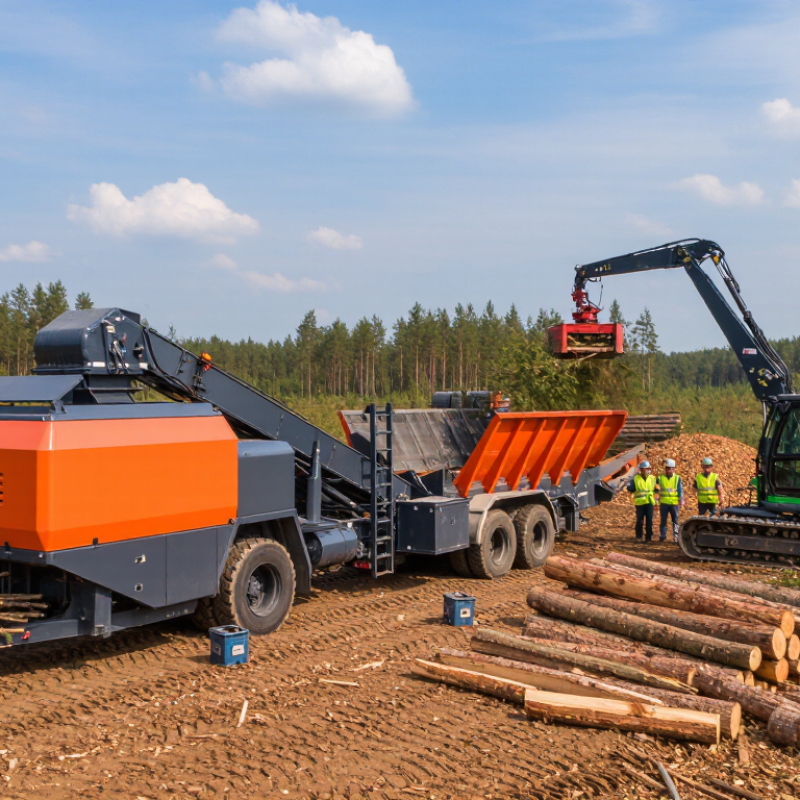
Before comparing machines, record what you actually chip during a typical week. Note the wood species, branch diameter, and whether material is fresh, dry, crooked, or leafy. Straight, recently cut limbs behave differently from tangled orchard prunings. Measure the largest pieces, not just the average. That number matters.
Estimate hourly output from real jobs, including feeding and clearing time—not the advertised peak rate. Check where the chipper will operate: a narrow gate, soft ground, steep driveway, or remote site can change what is practical. Consider whether power is available or a towable, engine-driven unit suits the work better. Think about chip size, too. Landscaping and biomass handling may require different output consistency. Check how knives are inspected and adjusted, and whether routine service is manageable with your crew’s tools.
Weather and operator experience deserve attention. Wet leaves can bridge in a hopper, while dry, brittle wood may create more dust. Leave room for safe feeding and chip discharge; a machine that fits on paper may be awkward beside a fence. Check noise limits and transport width for each work location. Estimates can be wrong. Revisit them after a trial run, since one overlooked pile can change the workload.

Drum chippers differ in how they are mounted and powered. Towable, engine-driven models suit crews moving between sites, while stationary units fit regular yard processing. Some machines use tractor power. Their rotating drum pulls branches toward fixed knives, producing consistent chips when blades are sharp and material feeds evenly. That consistency can matter more than a headline capacity figure.
Choose capacity around the wood you actually process. Measure typical branch diameter, and consider species, moisture, and crooked limbs. A chipper rated for large logs may struggle when fed dense, wet hardwood continuously. Power requirements rise with material size and feed rate; undersizing the engine or tractor can cause slow feeding and frequent stalls. Compare sustained working capacity, not only maximum diameter. A tidy specification sheet can still be misleading.
Tips: Match the feed opening to your common branch size, then leave room for occasional larger pieces. Check the power source, required horsepower, and transport weight before buying. Ask how often knives need adjustment, too. Small detail, big downtime. Keep branches within the manual’s limits, and inspect the feed area before operation. Real workloads are messy, and my first capacity estimate would probably be too optimistic.
| Drum Chipper Type | Typical Maximum Feed Diameter | Indicative Throughput | Typical Power Requirement | Best Suited For | Key Buying Consideration |
|---|---|---|---|---|---|
| Small PTO drum chipper | About 10–15 cm (4–6 in) | About 1–5 metric tonnes/hour | Typically 20–60 hp (15–45 kW) from the tractor PTO | Small farms, orchards, and light property maintenance | Check tractor PTO power, shaft compatibility, and hydraulic requirements. |
| Compact engine-powered drum chipper | About 15–20 cm (6–8 in) | About 2–8 metric tonnes/hour | Typically 50–120 hp (37–90 kW) | Landscaping crews and small tree-care operations | Compare transport weight, feed opening, and service access. |
| Mid-size commercial drum chipper | About 20–30 cm (8–12 in) | About 5–20 metric tonnes/hour | Typically 100–250 hp (75–186 kW) | Regular tree work, municipal maintenance, and biomass preparation | Match engine power and feed-roller capacity to the expected material mix. |
| Large industrial drum chipper | About 30–50 cm (12–20 in) or more, depending on design | About 15–60+ metric tonnes/hour | Typically 250–600+ hp (186–447+ kW) | Forestry operations, large biomass plants, and high-volume processing | Verify site power, material-handling equipment, chip-size control, and maintenance capacity. |
Figures are indicative planning ranges, not guaranteed machine ratings. Actual throughput and power needs vary with wood species, moisture, branch structure, feed consistency, knife condition, and desired chip size. Confirm rated capacity and power requirements for the specific machine and operating conditions before purchase.
A drum chipper should match the material you actually process, not just the largest capacity listed on a specification sheet. Check whether its feed system handles crooked limbs, damp brush, and mixed diameters without frequent manual repositioning. Feed rollers should grip steadily, while controls should let the operator stop or reverse material promptly. Try to assess the infeed opening at working height, too; a machine that looks roomy on paper may feel awkward beside a pile of branches. Small details matter.
Safety features deserve a hands-on review. Look for accessible emergency stops, clear guarding around moving parts, and controls that are easy to identify while wearing gloves. Ask how the machine prevents unexpected restarting after a shutdown. Before clearing a jam or inspecting cutting components, follow the manual’s shutdown and isolation procedure. Never rely on a stop button alone. A neat spec sheet can still mislead.
Maintenance access affects uptime. Check whether operators can reach service points, inspect knives, and clean around the drum without awkward lifting or cramped access. Ask about sharpening intervals, replacement parts, and the tools needed for routine checks. A chipper that is slightly slower but simpler to maintain may suit a small crew better. That trade-off is not always obvious until the first busy week. Keep the inspection practical: watch a demonstration, note noise and vibration, and ask what routine upkeep takes on an ordinary workday.
A drum chipper’s purchase price is only the visible part of its cost. Estimate annual depreciation, financing, insurance, fuel, scheduled service, and wear parts, then divide by realistic productive hours—not the hours on the engine meter. The U.S. Bureau of Labor Statistics reported a May 2023 median annual wage of $60,640 for diesel service technicians and mechanics. Dealer labor invoices may be higher, so ask for local shop rates and travel charges. Small costs add up.
Parts availability can decide whether a chipper earns money or sits beside a pile of logs. Ask the dealer for current lead times on knives, screens, belts, bearings, and hydraulic components. Request a written parts list with prices, stocking status, and emergency-order options. Check whether common wear parts can be sourced locally, and whether service technicians can reach your site. A quoted delivery time is not a guarantee.
Dealer support deserves a practical test. Ask who answers after-hours calls, what field-service response time is typical, and whether technicians carry diagnostic tools. Equipment cost-planning guidance separates ownership expenses from operating expenses; use that distinction in your comparison. Track expected utilization carefully. It is easy to assume full production every day, but weather, hauling delays, and uneven wood supply reduce working hours. I would still leave a contingency line. Actual downtime rarely follows a spreadsheet.
Choosing a drum chipper starts with the material, not the largest number on a specification sheet. Measure the average branch diameter and note the toughest wood you process. A machine that handles occasional six-inch limbs may struggle with steady, knotty hardwood. Check the stated capacity, engine power, and feed rate together; capacity alone can exaggerate real output. That matters.
Estimate your busiest workday, then allow for pauses to clear jams, reposition logs, and empty the chip pile. If your crew handles wet, tangled brush, a wider infeed and accessible controls can save time. Ask how feed rollers adjust and whether routine blades can be sharpened locally. Small details count. A fast machine is no bargain if it sits idle waiting for parts.
Set the budget around total operating cost, not just purchase price. Include fuel, blade service, transport, and the labor needed to move material safely. For a small property, a compact unit may fit narrow paths and reduce hauling demands. A contractor facing long daily runs may justify more power and a higher feed rate. Compare specifications against actual jobs, and leave room for uncertainty: branch sizes vary, and production estimates often look cleaner on paper than in the yard.
Same Day Shipping
ISO Certified Production