Choosing the best Core Drill Rig in 2026 starts with the material, hole size, and conditions on site. A rig for a small indoor concrete opening may be poorly suited to repeated, large-diameter coring. Match the motor’s power and speed range to the bit manufacturer’s specifications. Check the rig’s drilling capacity, mounting method, and compatibility with wet or dry operation. Small details matter. A loose anchor, awkward feed handle, or short cable can slow a job and affect control.
Consider the work area, too. Measure access points and overhead clearance before choosing a rig. For vertical or angled drilling, confirm that the stand can be secured correctly and that the operator can maintain a stable working position. Compare service access, replacement-part availability, warranty terms, and the support offered by the supplier. A low purchase price is not the whole cost. Downtime has a price as well.
Experienced operators often stress the value of matching the rig to the task, but I cannot verify a named expert’s quotation from the information supplied. I will not invent one. This guide instead explains the selection criteria and trade-offs readers can check against equipment manuals, bit specifications, and supplier documentation. Some jobs still require an imperfect compromise between portability and capacity. Be honest about that. The right choice is the rig that meets the job’s technical demands without adding unnecessary weight, complexity, or cost.
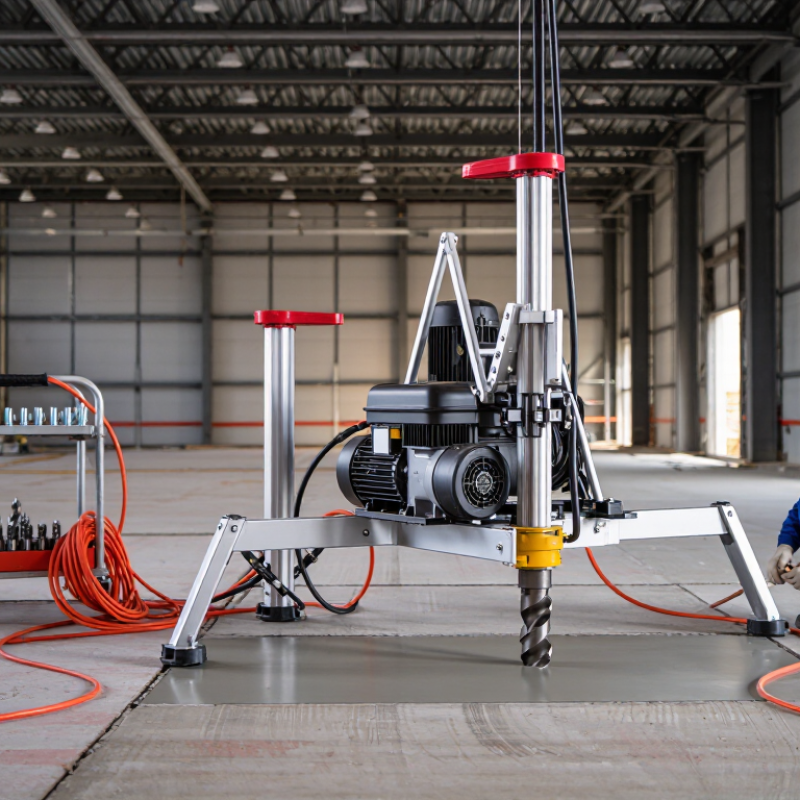
How to Choose the Best Core Drill Rig in 2026?
A core drill rig rotates a hollow, diamond-tipped bit to cut a clean circular opening through concrete, masonry, or stone. The main types are handheld, stand-mounted, and track-mounted rigs. Handheld models suit small holes and tight spaces, but the operator must control more vibration and drift. Stand-mounted rigs anchor to the surface, helping keep larger holes straight. Track-mounted systems can handle demanding work on walls or floors, though they take longer to position. Choose by hole diameter, material, access, and required accuracy—not motor power alone.
Dust control matters as much as drilling capacity. OSHA’s construction silica standard, 29 CFR 1926.1153, sets an eight-hour permissible exposure limit of 50 µg/m³ and an action level of 25 µg/m³ for respirable crystalline silica. Water-fed drilling or suitable dust collection helps control exposure. For wet work, check water flow and drainage; a slick floor can create its own hazard. A rig may look powerful on paper, yet prove awkward when its base cannot sit flat.
Tips: Match the rig to the largest hole you actually need. Check anchor stability, bit compatibility, and clearance before setup. For repeated holes, a stand-mounted rig usually improves consistency. Still, the best choice is not always obvious—test the setup on similar material when possible.
| Rig Type | Typical Application | Power and Setup | Main Advantages | Key Limitations | Best Choice When... |
|---|---|---|---|---|---|
| Handheld Concrete Core Drill | Small-diameter holes in concrete, masonry, and similar construction materials. | Usually electric; operated by hand with a compatible diamond core bit. Wet or dry drilling depends on the tool and bit. | Portable, quick to position, and useful where installing a drill stand is impractical. | Operator control and fatigue become important as hole diameter, drilling time, or material hardness increases. It is not suitable for every large or deep hole. | You need mobility and are making relatively small holes in accessible locations. |
| Stand-Mounted Concrete Core Drill | Accurate holes for plumbing, electrical, HVAC, anchors, and other building services. | An electric or hydraulic motor travels along a drill stand. The stand is commonly secured with an anchor; some compatible setups use a vacuum base on suitable surfaces. | Provides stable, controlled drilling and is well suited to repeatable holes, larger diameters, and angled drilling when the equipment allows. | Requires space and time to position and secure the stand. Water management and safe handling of the core are also needed for many jobs. | Accuracy, repeatability, or a larger hole matters more than the fastest setup. |
| Heavy-Duty Hydraulic Concrete Core Drill | Large-diameter or demanding concrete drilling on construction, infrastructure, and demolition projects. | Hydraulic power is supplied by a separate power pack. The motor is generally mounted on a secured stand or other engineered support. | Suitable for demanding applications and can be configured for jobs where electric equipment is not the preferred option. | Requires a hydraulic power source, hose management, and trained setup. The complete system is less portable than a small electric drill. | The job calls for sustained heavy-duty work and the site can support the power pack and rig setup. |
| Surface Mineral Exploration Core Drill Rig | Recovering cylindrical rock samples for geological exploration and mineral assessment. | Typically mounted on a truck, trailer, or tracked carrier. A drill string and core barrel advance into rock; wireline systems can retrieve the inner tube without removing the entire drill string. | Designed for exploration drilling and recovery of continuous rock core. Wireline retrieval can reduce the time needed for repeated core recovery at depth. | Requires specialized crews, drilling fluids or other ground-control measures as conditions require, and substantial site access and logistics. | You need geological core samples from a surface exploration program, not holes in building concrete. |
| Underground Mineral Exploration Core Drill Rig | Core drilling from underground mine workings or confined underground locations. | Compact layouts are designed to fit underground access constraints. Rigs may be mounted on skids or carriers and use drilling systems suited to the planned hole direction and site conditions. | Can operate in restricted underground spaces and support exploration from existing workings. | Access dimensions, ventilation, water management, ground conditions, and underground safety requirements constrain selection and setup. | The drilling location is underground and the rig must fit the available headings and access route. |
| Selection note: First identify whether the job is concrete coring or geological exploration—these are different equipment categories. Then compare required hole diameter and depth, material or rock conditions, drilling direction, available power, access and mounting options, water management, and operator requirements. Confirm final capacity and setup limits in the equipment and bit specifications. | |||||

Copyright © 2011-2025 Davis Valve.
All Rights Reserved.


Same Day Shipping
ISO Certified Production