Why Choose Carbon Steel Lost Wax Casting for Your Projects?
In the world of manufacturing, the choice of materials can significantly affect project outcomes. Carbon Steel Lost Wax Cast is gaining attention for its unique properties. Experts recommend this method for various applications, from industrial components to artistic pieces.
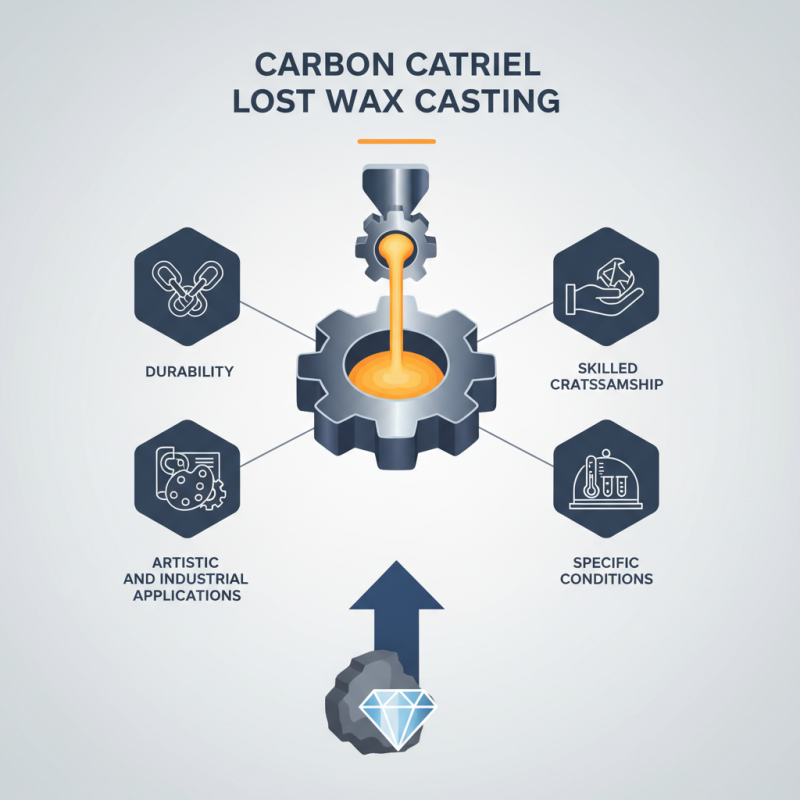
John Smith, a renowned metallurgist, says, "The durability and precision of Carbon Steel Lost Wax Cast make it an ideal choice for demanding projects." This emphasizes its reliability in producing complex shapes with excellent surface finishes. Choosing this method enhances both performance and aesthetics.
Despite its advantages, challenges exist. The process requires skilled craftsmanship and specific conditions. It may not be the best fit for every application, demanding careful consideration. However, when used correctly, Carbon Steel Lost Wax Cast can transform projects, offering unmatched quality and potential.
Understanding Carbon Steel Lost Wax Casting Process
The carbon steel lost wax casting process is a unique method used for creating intricate parts. This technique involves creating a wax pattern, which is then coated with a ceramic shell. Once the shell hardens, the wax is melted away, leaving a cavity for molten carbon steel. This allows for precise detailing and a smooth finish on the final product.
One notable benefit of this process is its ability to produce complex geometries. Many industries rely on it for custom components. However, achieving high precision can be challenging. Factors like temperature control and material quality heavily influence the outcome. A slight miscalculation may result in defects, requiring additional time and resources to correct.
Interestingly, the process allows for some creativity. Artists and engineers alike can experiment with designs and techniques. However, it requires a balance between innovation and practicality. Understanding the limitations of carbon steel is essential. Not every design will yield optimal results. This makes it necessary to engage in detailed planning and prototyping. Ultimately, the success of lost wax casting hinges on a combination of experience and meticulous execution in the workshop.
Advantages of Using Carbon Steel in Casting Applications
Carbon steel lost wax casting offers numerous advantages in various industrial applications. One notable benefit is its high strength-to-weight ratio, making it ideal for construction and manufacturing sectors. Industry reports indicate that carbon steel's tensile strength can reach up to 580 MPa, which is significantly higher than many other materials. This strength translates into durable components that can withstand significant stress and strain.
Another key advantage is resistance to deformation. Carbon steel maintains its shape under pressure, which is crucial for precise applications. The casting process provides a smooth surface finish, reducing the need for extensive machining. A study from the American Society of Mechanical Engineers (ASME) reveals that components produced through lost wax casting have a tolerance of up to ±0.1 mm, enhancing their fit and function in assemblies.
Tip: When choosing carbon steel for your project, consider its specific alloy composition. Different compositions can enhance properties like corrosion resistance or weldability, tailoring the material to your needs.
Moreover, carbon steel is often more cost-effective than alternatives like stainless steel. While it may not perform as well in highly corrosive environments, with proper coating and maintenance, it can be effectively used in a wide range of conditions. However, one should critically assess the end-use environment to avoid premature failure.
Applications and Industries Utilizing Carbon Steel Castings
Carbon steel lost wax casting is gaining traction in various industries due to its unique properties. This process ensures precise dimensions and excellent surface finishes, making it suitable for complex designs. Industries like automotive and aerospace benefit from this technology, as carbon steel offers high strength and durability. According to the International Journal of Advanced Manufacturing Technology, manufacturers using this method report a decrease in material waste by up to 30%.
In the construction sector, carbon steel castings find extensive applications. They are ideal for components that require exceptional toughness, such as structural supports and connectors. A recent report by the American Foundry Society indicates that nearly 25% of castings produced annually are made from carbon steel. This reflects a growing preference for carbon steel among engineers and designers.
Additionally, the oil and gas industry often relies on carbon steel castings for valves and fittings. These components must withstand harsh environments and high pressures. The corrosion resistance and longevity of carbon steel make it a top choice. However, achieving optimal casting quality is challenging. Variability in the alloy composition can lead to defects, necessitating careful monitoring throughout the production process.
Comparing Carbon Steel with Other Casting Materials
When comparing carbon steel to other casting materials, it's essential to consider its properties. Carbon steel offers excellent strength and durability. This makes it suitable for heavy-duty applications. Conversely, materials like aluminum are lighter but may not withstand extreme pressures.
Another factor is cost-effectiveness. Carbon steel is generally affordable. This can be critical in large-scale projects. Other materials might come with higher price tags. However, they might excel in specific applications, such as aesthetic finishes in architectural projects.
Surface finish is another aspect where carbon steel shines. The lost wax casting method provides fine details. This process allows for intricate designs without sacrificing quality. Other casting methods might struggle with detailed work, leading to rougher edges and imperfections. It's crucial to weigh individual project needs against material properties to find the best fit.
Why Choose Carbon Steel Lost Wax Casting for Your Projects? - Comparing Carbon Steel with Other Casting Materials
| Material | Cost ($/kg) | Strength (MPa) | Precision (mm) | Corrosion Resistance | Applications |
| Carbon Steel | 2.50 | 400-600 | +/- 0.1 | Moderate | Manufacturing, Automotive |
| Aluminum | 3.00 | 200-300 | +/- 0.2 | High | Aerospace, Consumer Goods |
| Stainless Steel | 5.00 | 500-700 | +/- 0.05 | Very High | Food Processing, Medical |
| Bronze | 4.00 | 300-400 | +/- 0.15 | Moderate | Sculptures, Marine Parts |
Best Practices for Successful Carbon Steel Lost Wax Casting
Carbon steel lost wax casting can be an excellent choice for various projects. The process involves creating a wax model which is then coated in a ceramic shell. After heating, the wax melts away, leaving a cavity for pouring molten metal. This method ensures precision and intricate details, essential for complex designs.
To achieve successful results, preparation is key. The wax model must be flawless; any imperfection can reflect in the final product. Pay careful attention to the temperature of the molten steel. An improper temperature can lead to defects, like bubbles or incomplete filling. Each pour should be monitored closely to ensure optimal quality.
Cleaning the casted parts afterward is equally essential. Proper cleaning highlights the design’s details. Additionally, refining the surface can further enhance the visual appeal. Consider the potential challenges that arise during casting. Every project might face unique hurdles, from material choice to cooling time. Reflecting on these issues can lead to improvements in future projects.
Why Choose Carbon Steel Lost Wax Casting for Your Projects?