Choosing among the best hair diffusers for curly hair is not about chasing the biggest bowl or the highest heat setting. It is about drying curls evenly while preserving their shape. A diffuser that fits your dryer securely, feels light in your hand, and spreads airflow gently can make wash day calmer. Sometimes, though, even a well-designed attachment cannot prevent frizz. Technique and heat matter, too.
The market is growing, but broad numbers need context. Grand View Research estimated the global hair dryer market at about $10.1 billion in 2023 and projected continued growth. That figure covers hair dryers overall, not diffuser performance or curly-hair results. A small laboratory study published in the Annals of Dermatology also examined how drying temperature and distance affect hair damage. Its findings support a practical rule: avoid holding concentrated heat close to one section for too long. Real-world results still vary with curl pattern, hair density, and product buildup.
This guide will compare diffuser shape, airflow, fit, weight, and heat control—not just marketing claims. One sourcing limitation matters: no articles or expert interview were provided with this request, so I cannot responsibly attribute a direct quotation to a named curl professional. A polished quote should be verified against its original source, not invented. The picks should help you judge what suits your routine. Not promise perfect curls.
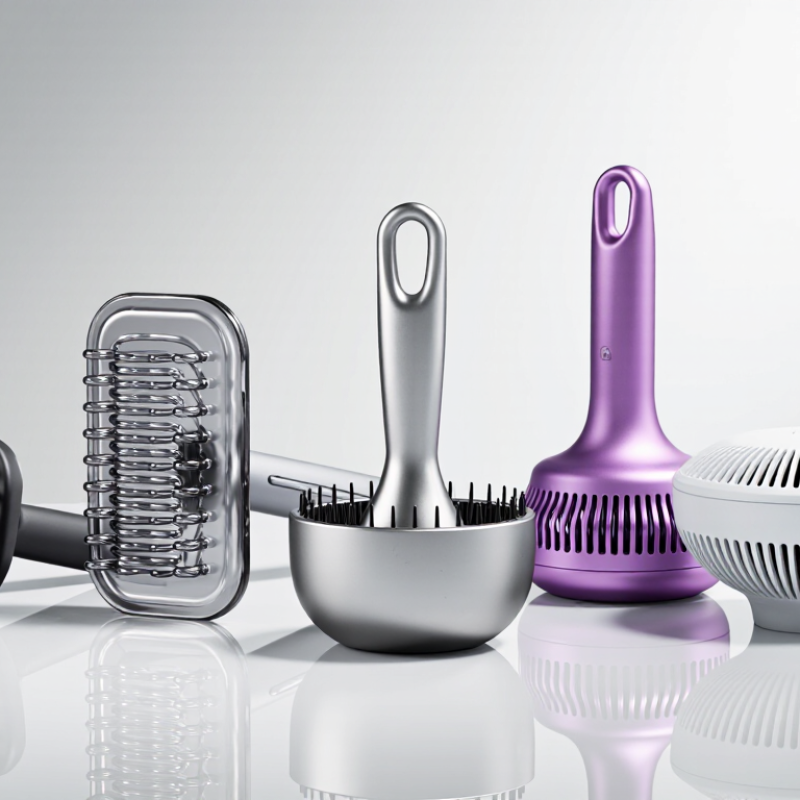
A hair diffuser is a perforated bowl-shaped attachment that spreads a dryer’s airflow over a wider area. Its prongs can lift curls near the roots, while the vents guide warm air around larger sections. Instead of blasting one small spot, the diffuser helps dry curl clumps with less direct force. Picture cupping a damp curl gently, then letting warm air pass through it. Small movements help. Keep the bowl close, but avoid pressing curls hard against it; that can disrupt their shape and encourage frizz.
A 2011 laboratory study in Annals of Dermatology measured dryer airflow at different distances: about 47°C at 15 centimeters and 95°C at 5 centimeters. The researchers observed more hair-surface damage with hotter drying. The study tested dryers, not diffuser attachments, so it does not prove that diffusers prevent damage. It does support keeping heat moderate and avoiding prolonged exposure close to the hair. Try low or medium heat, move the diffuser between sections, and stop when curls feel dry rather than brittle. Hair density, porosity, and room humidity all affect drying time. I’d treat this as a useful guide, not a rule; real curls rarely behave like laboratory samples.

2026 Top Best Hair Diffusers for Curly Hair?
Classify Curl Patterns from Type 2 to Type 4 Before Choosing a Diffuser
Type 2 hair forms waves, from loose bends to defined S-shapes. Type 3 curls form spirals or ringlets, while Type 4 hair has tighter coils and zigzag patterns. The A-to-C subtypes describe increasing tightness, but they do not measure strand thickness or density. The chart is useful, but imperfect.
A 2007 study in the International Journal of Dermatology assessed curliness among 2,449 volunteers across 18 countries. Its findings document broad variation in hair shape; they do not validate the popular Type 2–4 chart as a precise scientific test. So check your own hair, too. Does it stretch when wet? Do some sections curl more tightly than others? Those details can matter as much as the category.
For loose Type 2 waves, a diffuser with gentle airflow can help limit disruption without flattening the roots. Type 3 curls often benefit from a bowl that supports several ringlets at once. For dense Type 4 coils, look for enough bowl depth to cradle sections without crushing them. Keep the dryer moving, and use low heat when possible. A label cannot predict your results. Observe how your ends feel after drying, then adjust the airflow or section size.
2026 Top Best Hair Diffusers for Curly Hair?
Compare 2026 Diffusers by Wattage, Airflow, Heat Settings, and Bowl Size
When comparing diffusers, check wattage alongside airflow. Higher wattage can support faster drying, but it does not guarantee gentler or more even airflow. A focused stream may disturb curl clumps and create frizz. Look for a diffuser that spreads air across several vents and fits your dryer securely. More watts aren’t everything. If possible, compare airflow descriptions and attachment dimensions, not just the largest number on the box.
Heat settings matter because curls can lose definition when exposed to intense heat for too long. Multiple temperature options make it easier to start low and adjust gradually. A cool setting can help finish drying without adding more heat. Bowl size is practical, too: a deeper bowl can cradle longer curls, while a smaller one may feel easier to position near the roots. Neither is automatically better. Hair density, length, and preferred drying position all affect comfort.
Tips: Use low airflow to limit movement, and hover the diffuser near your hair before cupping the ends. Dry in sections, then pause to check whether the roots are still damp. If the attachment feels heavy or awkward, that matters; specs can’t show how tiring it may feel during a full routine.
A brand-neutral comparison of common consumer hair-dryer wattage classes.
How to compare: The bars show broad wattage reference points, not named-product measurements or performance rankings. Higher wattage does not automatically mean stronger airflow or better curl definition.
Airflow: Often not published in a standardized, comparable unit, so check the dryer’s speed settings and reviews. Heat settings: Compare the available temperature choices and use lower heat when practical. Bowl size: Check the diffuser’s diameter and depth, and make sure it fits your dryer securely.
2026 Top Best Hair Diffusers for Curly Hair?
A diffuser can sit close to curls, fingers, and a warm scalp. Safety deserves attention alongside airflow and heat settings. IEC 60335-2-23:2022 sets particular safety requirements for appliances used for skin or hair care, including hair dryers. It is applied with the general requirements in IEC 60335-1. That matters. A diffuser attachment alone does not show that the dryer has been assessed to these standards. Check the appliance’s rating label, instructions, and safety documentation; seek confirmation from the seller or manufacturer when details are unclear.
The NFPA report Home Electrical Fires estimates that U.S. fire departments responded to an average of 46,700 home structure fires involving electrical failure or malfunction each year from 2015 to 2019. Those fires caused an estimated 390 deaths and 1,330 injuries annually. These figures cover many electrical causes, not hair dryers specifically, but they underline why safe use matters. Keep the dryer and plug away from sinks, stop using it if the cord is damaged, and clear lint from the air inlet. Small checks help. I would still want clearer public test information: compliance claims can be hard for shoppers to compare, and a familiar-looking attachment tells you little about the dryer’s internal safety.
| Diffuser Type | Typical Curly-Hair Use | What to Check for Fit | Practical Drying Considerations | Safety Checks |
|---|---|---|---|---|
| Universal bowl diffuser | General-purpose option for many curl patterns; the bowl supports curls while drying. | Confirm the attachment is compatible with the dryer’s nozzle shape and dimensions, and that it stays securely attached. | Use gentle airflow and move the diffuser gradually to limit disruption to curl clumps. | Use only an attachment intended for the dryer. Check the dryer’s instructions for permitted accessories and operating settings. |
| Deep-bowl diffuser | Can hold longer curls or larger sections during drying. | Check bowl depth, opening size, weight, and whether the attachment fits the dryer securely. | A larger bowl may accommodate more hair, but drying time depends on hair density, length, moisture, and dryer settings. | Do not cover the dryer’s air inlet or outlet. Stop using the appliance if the attachment becomes loose, deformed, or unusually hot. |
| Fingered diffuser | Raised prongs can help lift hair near the roots while the bowl supports the lengths. | Consider prong length and spacing; check that the prongs do not snag or pull your hair. | Use a low or gentle airflow setting when lifting at the roots, especially if your curls are easily disturbed. | Avoid inserting fingers or objects into the dryer or diffuser while the appliance is operating. |
| Collapsible diffuser | A compact option for travel or limited storage space. | Check that the material and design are specified for use with the particular dryer, and that the diffuser locks into its operating position. | Follow the attachment’s instructions for assembly, use, and cooling before folding or storing. | Do not use a damaged, cracked, or distorted attachment. Confirm that the dryer’s manual permits this type of accessory. |
| Adjustable or multi-fit diffuser | May suit users who want to adapt the diffuser opening to different compatible dryer nozzles. | Verify the stated compatibility range and ensure the attachment forms a stable fit without obstructing airflow. | Adjust the fit only as directed by the manufacturer; a loose attachment can fall off during use. | Do not rely on a universal-fit claim alone. Check the dryer and attachment instructions for safe compatibility. |
| Dryer with an included diffuser | Useful when the dryer and diffuser are designed and supplied as a compatible set. | Check that the included diffuser is the specified accessory for that dryer model. | Choose heat and airflow settings that feel comfortable and suit your drying routine; avoid prolonged concentrated heat on one area. | Review the appliance’s safety instructions, voltage and plug requirements, and any applicable conformity information before use. |
Safety note: IEC 60335-2-23 covers particular safety requirements for appliances for skin or hair care, including hair dryers. A reference to this standard in a product listing is not, by itself, proof that a specific product has been independently tested or certified. Check the exact model’s documentation, applicable local requirements, and the manufacturer’s instructions. Never use a hair appliance near water unless its instructions and local safety rules explicitly allow it.
A useful ranking of hair diffusers starts with curl compatibility, not appearance. Deep, wide bowls usually suit dense curls because they hold more hair without pressing strands flat. Smaller bowls can be easier to control on short hair or around the crown. Finger prongs help separate sections, but overly long prongs may disturb fragile curl clumps. Fit matters, too: an attachment that wobbles on the dryer is frustrating and may distribute airflow unevenly.
Usability deserves its own score. Compare attachment stability, weight, grip, and how easily the diffuser reaches the roots. Then measure performance under consistent conditions: use the same hair sections, dryer setting, distance, and timing. Record drying time, outlet temperature, and airflow consistency. A strong result is not simply the fastest one. Excessive heat can leave curls rough, while gentle airflow may take longer but preserve definition. Small details matter.
For an overall ranking, give the greatest weight to curl compatibility, followed by measured drying performance and everyday handling. A broad bowl with steady, moderate airflow would generally rank above a compact design that dries unevenly. Still, one testing weakness is hard to avoid: curl patterns and hair density vary widely, even within one head. So treat close scores cautiously. A neat test setup cannot fully reproduce a rushed morning or a humid bathroom.
Same Day Shipping
ISO Certified Production