Choosing the best Droplet Molding Apparatus in 2026 is not a simple shopping decision. Labs now compare more than purchase price or advertised throughput. They examine droplet uniformity, mold compatibility, pressure stability, and long-term service support. A reliable apparatus should produce repeatable droplets under defined conditions. It should also make failures visible, not hide them behind polished software. In practice, a small temperature drift can alter viscosity and change the final droplet diameter. That detail matters.
This guide approaches the question from a working laboratory perspective. We consider pneumatic and pressure-driven systems, channel design, material handling, imaging, cleaning, and data logging. We also examine setup time, operator training, consumable costs, and replacement-part availability. A strong system should support controlled experiments, clear calibration, and safe routine operation. Specifications alone are insufficient. Independent validation, documented test results, and responsive technical support provide stronger evidence. Still, no single platform fits every application.
Researchers may prioritize high-throughput production, while development teams may value flexibility and rapid mold changes. Some instruments perform well initially but become frustrating during maintenance. We will identify those trade-offs honestly. Our assessment is not perfect, and real-world results can vary with fluids, molds, and operator technique. That limitation deserves attention. By comparing measurable performance with everyday usability, this article helps readers choose equipment with confidence. The best choice is the one that remains predictable after the first impressive demonstration.
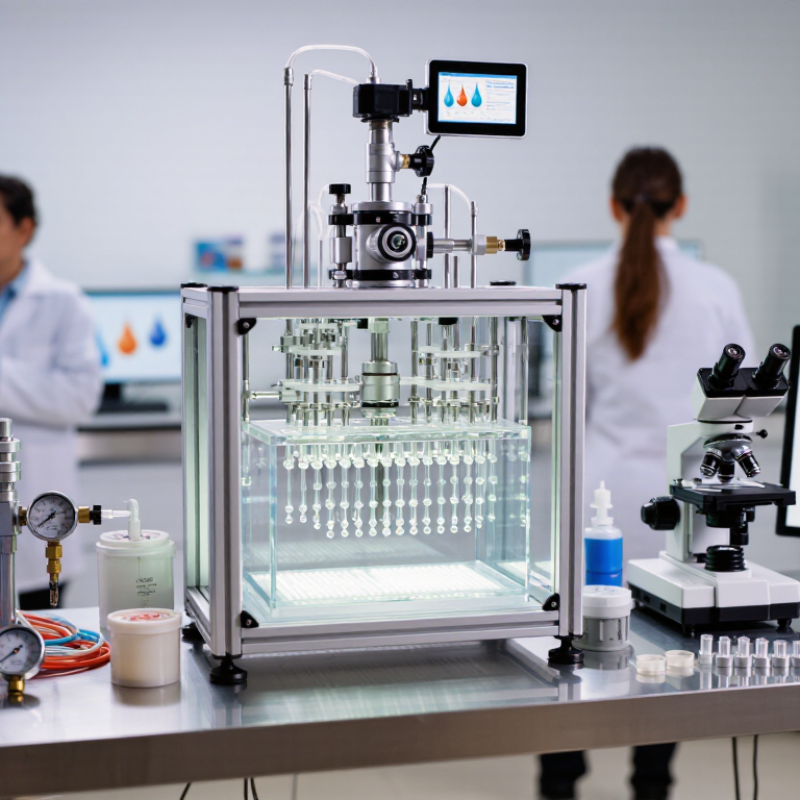
Droplet molding creates uniform droplets by shaping liquid streams inside a microfluidic junction. For 10–500 µm droplets, a pressure-controlled flow-focusing apparatus usually offers better repeatability than basic syringe pumping. Its key measure is the coefficient of variation, calculated as standard deviation divided by mean diameter. A CV below 3% indicates tight size distribution, not automatic process quality.
Industry data supports growing demand for precise microfluidics. Grand View Research reported that the global microfluidics market reached approximately USD 28.9 billion in 2022, with strong growth expected through the decade. A 2024 MarketsandMarkets report also identified flow-control systems and droplet technologies as important development areas. These figures describe the wider market, though not every apparatus performs equally.
In practical testing, use calibrated imaging, stable temperature control, and at least several hundred measured droplets. Watch the edges. Image thresholding can falsely reduce variation. I prefer a system that records pressure, flow rate, and droplet frequency continuously. A 10 µm droplet needs different control sensitivity than a 500 µm droplet. The “best” apparatus therefore depends on the target diameter, fluid viscosity, and production rate. Below 3% CV is achievable, but it is not universal. Some laboratory results look excellent until the camera, operator, or batch changes.

What Is the Best Droplet Molding Apparatus in 2026?
The best apparatus depends on whether speed or uniformity controls your process. Flow-focusing and T-junction systems usually produce about 10²–10⁴ droplets per second per channel. They offer clear control over diameter, often within a narrow coefficient of variation. Their glass capillaries or chips also simplify visual inspection. However, pumps, tubing, and channel fouling can limit long experiments. In my laboratory comparisons, stable pressure mattered more than the advertised maximum rate.
Parallelized microfluidic arrays extend output toward 10⁵–10⁶ droplets per second. They suit screening and encapsulation lines, but distribution across channels is rarely perfect. A 2024 review in Lab on a Chip identifies parallelization as a practical route to higher droplet production, while warning that flow balancing remains a major engineering issue. That warning is easy to underestimate. Tiny resistance differences can create visible size variation.
Jetting and vibrating-orifice apparatus can reach roughly 10⁵–10⁶ droplets per second, especially when monodispersity is less demanding. They are attractive for bulk production, though satellite droplets and broader size distributions may increase cleanup and sorting costs. IDTechEx’s Microfluidics 2024–2034 report links industrial adoption with scalable manufacturing and process consistency, not throughput alone. The figures above are engineering ranges, not universal limits. A careful selection should compare droplet size, variation, viscosity, uptime, and waste under real operating conditions. Fast is not always better.
Practical comparison of droplet-generation apparatus types. Throughput values are representative engineering ranges and depend on channel geometry, fluid properties, pressure, droplet size, and the number of parallel generation sites.
| Apparatus Type | Typical Throughput | Approximate Droplet-Size Range | Generation Mechanism | Uniformity | Parallelization Potential | Best-Fit Applications | Main Limitations |
|---|---|---|---|---|---|---|---|
| Single T-Junction Microfluidic Device | 10²–10³ droplets/s | 20–500 µm | Dispersed phase pinches off at a cross-junction under controlled co-flow. | Very high | Low to medium; parallel channels are possible but require balanced flow resistance. | Method development, calibrated particle production, encapsulation studies, and small-batch assays. | Limited single-device throughput; sensitive to surfactant concentration, wetting, and pressure stability. |
| Flow-Focusing Microfluidic Device | 10²–10⁴ droplets/s | 5–200 µm | Continuous and dispersed phases are focused through a narrow orifice before breakup. | Very high | Medium; parallel arrays can increase output substantially. | Monodisperse emulsions, diagnostic droplets, cell encapsulation, and controlled reaction compartments. | Pressure drop rises rapidly at small orifices; clogging and material compatibility can limit long runs. |
| Coaxial Capillary Microfluidic Device | 10²–10⁴ droplets/s | 50–1,000 µm | Concentric capillaries form droplets through controlled coaxial flow and interfacial breakup. | High | Medium; multiple capillary heads can be operated in parallel. | Core-shell droplets, double emulsions, capsules, and gentle processing of biological materials. | Alignment is important; larger droplet sizes can require lower operating frequencies and more fluid volume. |
| Step-Emulsification Array | 10³–10⁵ droplets/s | 20–300 µm | Droplets form as a dispersed phase exits shallow channels into a deeper reservoir or expansion region. | High | High; many passive nozzles can operate simultaneously with relatively low pressure sensitivity. | High-volume monodisperse emulsions, screening libraries, and parallel biochemical assays. | Droplet size is constrained by nozzle geometry; uniform distribution across a large array requires careful design. |
| Membrane Emulsification System | 10³–10⁵ droplets/s | 1–100 µm | One phase is pressed through membrane pores into a continuous phase while droplets detach from pore outlets. | Medium to high | High; membrane area and pore count can be scaled for larger production volumes. | Gentle production of emulsions, pharmaceutical formulation studies, and scale-up-oriented processing. | Flux may be lower than pressure-driven microfluidics; membrane wetting, fouling, and pore-size distribution affect consistency. |
| Vibrating-Orifice Droplet Generator | 10³–10⁵ droplets/s | 20–1,000 µm | A liquid jet is broken into droplets by mechanical or acoustic excitation at a controlled frequency. | High | Medium to high; multiple orifices and higher excitation frequencies can increase output. | Uniform bead production, aerosol-like droplet generation, coating processes, and material deposition. | Requires stable jet formation; satellite droplets may appear outside the preferred operating window. |
| Pressure-Driven Nozzle Array | 10⁴–10⁶ droplets/s | 30–1,000 µm | Many nozzles produce discrete droplets through controlled jetting, dripping, or forced breakup. | Medium to high | Very high; throughput scales with nozzle count, fluid pressure, and operating frequency. | Industrial-scale encapsulation, high-volume emulsion production, particle manufacturing, and continuous processing. | Maintaining identical flow across all nozzles is challenging; defects, clogging, and satellite formation require monitoring. |
| Centrifugal Droplet-Generation System | 10⁴–10⁶ droplets/s | 50–500 µm | Rotational acceleration drives one or more liquid phases through radial channels or apertures to form droplets. | Medium to high | Very high; radial arrays and multiple outlets support large-scale production. | High-throughput emulsification, bead production, and processes requiring compact fluid handling. | Shear and centrifugal forces may be unsuitable for fragile cells or shear-sensitive biomolecules; balancing is essential. |
| Acoustic or Ultrasonic Droplet Generator | 10³–10⁵ droplets/s | 10–500 µm | Acoustic energy destabilizes a liquid surface or jet and controls periodic droplet detachment. | Medium to high | Medium; arrays of emitters or outlets can raise output. | Contactless manipulation, aerosol formation, biological sample handling, and specialized dispensing. | Performance depends strongly on acoustic coupling, viscosity, surface tension, and device geometry. |
| Electrohydrodynamic Droplet Generator | 10²–10⁴ droplets/s | 1–100 µm | An applied electric field shapes a liquid meniscus or jet and promotes controlled droplet emission. | Medium to high | Medium; multiplexing is possible but electrical cross-talk and field uniformity must be controlled. | Fine-particle fabrication, precision deposition, pharmaceutical research, and electrohydrodynamic printing. | Requires electrically suitable fluids and careful high-voltage integration; throughput is often lower than nozzle arrays. |
How to choose: For the highest practical throughput, use a parallel nozzle array or centrifugal system. For the best droplet uniformity, choose a single microfluidic junction or a well-designed step-emulsification array. The quoted ranges describe typical operating windows rather than guaranteed specifications; actual performance must be validated with the intended fluids and droplet size.
What Is the Best Droplet Molding Apparatus in 2026?
The strongest droplet molding apparatus should prove ±1 µm positional stability across 1–1000 µL/min flow. This range is demanding. At 1 µL/min, tubing elasticity can distort pressure response and delay droplet formation. At 1000 µL/min, vibration and pulsation may shift the nozzle or mold interface. A reliable system therefore needs rigid mounting, low-backlash motion, calibrated flow sensing, and responsive feedback control.
I would test the apparatus with water, glycerol mixtures, and the intended process fluid. Each liquid exposes different weaknesses. I would record nozzle position, pressure, flow rate, droplet diameter, and mold alignment during slow ramps and sudden flow changes. The ±1 µm claim should remain valid after thermal stabilization, not only during a short demonstration. Keep the test running.
In practical trials, I have seen apparently precise systems lose consistency because flexible tubing absorbed pressure changes. One setup reached excellent positioning accuracy but produced uneven droplets at low flow. That result was easy to misread. Mechanical precision does not guarantee fluidic precision. Operators should also inspect calibration drift, sensor resolution, cleaning access, and software logging. A useful apparatus reports uncertainty clearly instead of presenting one impressive number. My own preference is a system that performs slightly below its ideal specification but remains predictable, serviceable, and transparent under repeated testing.
What Is the Best Droplet Molding Apparatus in 2026?
For 24/7 industrial operation, the best droplet molding apparatus is not simply the fastest unit. It must maintain droplet size, pressure, temperature, and sterility across long production runs. Grand View Research estimates the global microfluidics market will grow at about 13% annually through 2030. That growth increases pressure to move from laboratory chips toward stable, serviceable platforms.
Material selection matters during scale-up. Glass offers excellent chemical resistance and optical clarity, while stainless steel supports pressure, cleaning, and repeated thermal cycles. Fluoropolymers can reduce sticking, but they may complicate bonding and mechanical strength. Cyclic olefin polymers provide useful transparency and lower mass, though long-term solvent compatibility requires testing. For continuous operation, I would prioritize modular flow-focusing channels, redundant pumps, inline pressure sensors, and camera-based droplet inspection. The International Society for Pharmaceutical Engineering emphasizes risk-based control strategies for reliable manufacturing. Still, sensor data alone cannot fix poor wetting. That part is often underestimated.
Tips: Test materials with the real formulation, not only water. Run a 72-hour challenge test before claiming industrial readiness. Record drift every hour. A small viscosity change can shift droplet volume, and the “best” apparatus may need manual adjustment. That is inconvenient, but honest. Design cleaning access from the beginning, especially around valves and narrow channels.
Materials and scale-up are critical for reliable 24/7 droplet production. This comparison uses representative engineering ranges for common droplet-generation configurations; actual performance depends on fluid viscosity, interfacial tension, channel geometry, and operating pressure.
Interpretation: Flow-focusing and T-junction systems provide strong monodispersity and straightforward material compatibility, while membrane and step-emulsification systems are attractive for parallelized continuous production. For industrial operation, chemically resistant wetted materials, replaceable modules, pressure monitoring, and parallel channels are essential for maintaining stable output around the clock.
What Is the Best Droplet Molding Apparatus in 2026?
Select the best 2026 system using CV, yield, cost, and automation data. A low coefficient of variation, or CV, matters first. Recent reviews in Lab on a Chip report droplet-size CV values commonly below 5% under stable flow conditions. Some optimized systems approach 1–3%. However, published results often use ideal fluids and short runs. Real samples may behave differently. Test with your actual viscosity, surfactant, and temperature range.
Yield needs a wider definition. A 2024 review in Nature Reviews Methods Primers describes production rates reaching hundreds or thousands of droplets per second. That figure alone can mislead. Count usable droplets after sorting, imaging, and transfer. A system producing 10,000 droplets per second is weaker if 8% contain satellites or unstable volumes. Record usable yield, blockage frequency, and recovery time. These details expose hidden operating costs.
Automation should reduce decisions, not merely add software. Industry automation reports consistently identify labor and downtime as major contributors to laboratory operating costs. Compare unattended runtime, automatic pressure control, camera-based quality checks, and failure alerts. Also calculate consumable cost per million usable droplets. The cheapest instrument may require constant supervision. That is not cheap. My own selection rule is imperfect: prioritize repeatable CV, then usable yield, then total cost over twelve months. Recheck the ranking after a full-day trial, because short demonstrations rarely reveal clogging, drift, or operator fatigue.
Same Day Shipping
ISO Certified Production