A Cylinder Piston Rod may look like a simple steel shaft, but its surface finish, straightness, material, and coating can influence seal life and cylinder performance. For global buyers, supplier selection therefore involves more than comparing unit prices. A rod that arrives with inconsistent chrome thickness or poor packaging can delay assembly and increase rework. Small details matter.
Market growth makes careful sourcing more relevant. Fortune Business Insights valued the global hydraulic cylinder market at approximately USD 14.19 billion in 2023 and projected it to reach USD 20.77 billion by 2032. This is a cylinder-market estimate, not a piston-rod-only forecast. Still, it signals continuing demand across construction, agriculture, manufacturing, and mobile equipment. John Watton, author of Fundamentals of Fluid Power Control, provides a useful engineering perspective: “Rod reliability depends on the cylinder system around it.” This is a paraphrase of his published work, not a verbatim quotation.
The suppliers in this guide are assessed through practical buyer concerns: material traceability, machining capability, surface treatment, inspection records, customization, and export support. Ask for measurable evidence, such as coating-thickness reports and straightness tolerances, rather than relying on polished catalog images. No supplier is ideal for every application. Price, lead time, and technical support can conflict, and published specifications may not reveal day-to-day consistency. That uncertainty deserves attention. The following list offers a starting point for comparison, not a substitute for qualification testing or direct technical review.
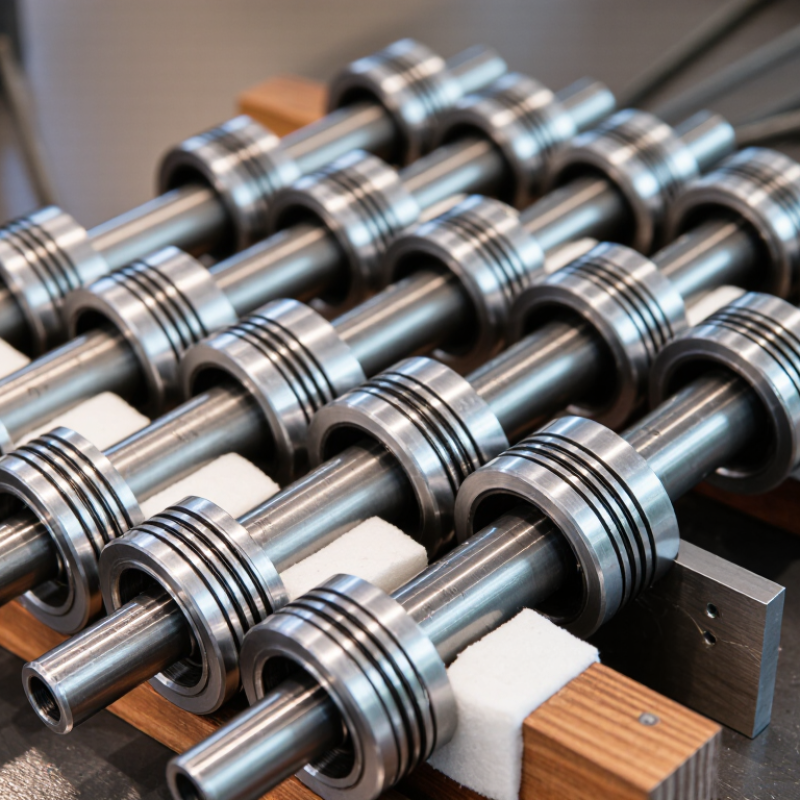
A cylinder piston rod is the hardened shaft that connects a hydraulic or pneumatic piston to an external load. As pressure moves the piston, the rod transfers force through the cylinder head. Its surface finish and straightness matter: a nick can damage seals, while corrosion may lead to leakage or premature wear. Rods are commonly made from steel and finished with coatings such as hard chrome, depending on load, environment, and maintenance needs. Small details matter.
Piston rods appear in construction equipment, agricultural machinery, factory presses, material-handling systems, and vehicle suspension components. On an excavator, for example, the rod extends to move a boom under heavy load; in a factory, it may position a press plate repeatedly. Grand View Research estimated the global hydraulic cylinder market at about USD 14.5 billion in 2023, with projected growth through 2030. That figure suggests broad demand, but it does not show how many rods are replaced or how long they last. Buyers should assess operating pressure, stroke length, side loading, corrosion exposure, and seal compatibility. A specification sheet cannot capture every field condition. Real-world wear can be messier.

For global procurement, a cylinder piston rod should be judged by measurable evidence, not a polished catalog. Check the drawing against the application: rod diameter, straightness, surface finish, hardness, and coating thickness all affect service life. Ask how each value is inspected and request sample reports tied to a production batch. Details matter. A certificate without traceable material records may offer limited reassurance.
Supplier evaluation should also cover process consistency and delivery risks. Ask whether the supplier controls machining, heat treatment, and surface coating, or relies on outside partners. Clarify inspection frequency, rejection handling, packaging, and replacement procedures before placing an order. For example, a rod may meet dimensional limits but still arrive with coating damage after long-distance shipping. Ask for evidence. Compare lead times, communication quality, export documents, and payment terms alongside unit price. A low quote can conceal extra inspection or freight costs. It is not always easy to compare suppliers fairly, especially when test methods differ; request the method and acceptance criteria in writing. A small trial order can reveal gaps, though it cannot guarantee every future batch will be identical.
Suggested evaluation weights for comparing suppliers. These are procurement-framework recommendations, not measured supplier rankings or market-survey results.
Compare suppliers using documented evidence such as inspection records, material certifications, quotation terms, and delivery performance. Adjust the weights to fit your application and sourcing priorities.
International buyers comparing ten cylinder piston rod suppliers should look beyond catalog dimensions. A rod may match a drawing yet fail in service if its coating, straightness, or surface finish differs from the application’s needs. Ask suppliers for material specifications, inspection records, and clear tolerance data.
Small details matter. A rough patch near a seal contact area can lead to premature wear.
Suppliers serving overseas customers should also explain packaging, lead times, and how they handle drawing changes. Request a sample or inspection report when the order is critical, and confirm whether measurements follow the same reference points as your engineering team.
Communication is part of quality.
Replies that leave basic questions unanswered deserve a closer look. Price comparisons can be misleading when one quotation excludes protective caps or export packing. Still, paperwork cannot show every production condition, and buyers may need to verify fit after delivery. That extra check is easy to overlook.
For global buyers, comparing cylinder piston rod suppliers starts with the material and its intended working conditions. Carbon or alloy steel may suit high-load equipment, while stainless steel can help where moisture or corrosive exposure is a concern. Ask how the rod is heat-treated, and request material and inspection records for the specified batch. A certificate is useful, but it does not replace checking that the details match your drawing. Details matter.
Finishing affects wear, sealing, and service life. Compare the specified surface roughness, coating thickness, and corrosion test results rather than relying on a polished sample alone. For chrome-plated rods, ask how coating adhesion and consistency are verified.
Customization also deserves close review: confirm diameter and length tolerances, thread form, end machining, and whether the supplier can hold them across repeat orders. A practical check is to inspect a sample with suitable measuring tools before approving production.
This takes time. It can prevent costly fit problems later. Supplier comparisons are rarely perfectly neat; a stronger finish or tighter tolerance may raise cost or extend lead time. Weigh those trade-offs against the operating environment, not just the quotation.
For global buyers, a polished piston rod is not proof of consistent quality. Ask for material certificates, hardness results, coating thickness, surface roughness, and straightness measurements. Request tolerances in writing, then compare them with the drawing and intended cylinder duty. ISO 4406 cleanliness codes apply to hydraulic-fluid contamination, not rod quality; keep those checks separate. One practical test: inspect a sample under angled light for coating pits, scratches, or uneven chrome. A spreadsheet can look perfect; the first sample may not.
Lead times need evidence, not just a quoted number. Ask suppliers to separate production time from inspection, packing, and transit, and to state what happens if a batch fails inspection. UNCTAD’s Review of Maritime Transport 2024 reports that shipping carries over 80% of global trade by volume, so port congestion can affect delivery even when factory work is on schedule. The World Bank’s 2023 Logistics Performance Index assesses 139 economies across areas including tracking and timeliness. Use these as context, not as a substitute for a shipment-specific plan. Paperwork can still arrive late.
Tips: Request a dated production schedule, inspection records, export packing details, and sample shipping documents before placing a large order. Confirm who handles customs paperwork and which party pays for corrective work. Ask for updates at agreed milestones. Keep one doubt in mind: a low price may hide vague tolerances or weak follow-up.
These are anonymized supplier profiles, not named or ranked companies. Lead times are indicative production estimates, not verified quotations; confirm specifications, capacity, shipping time, and current certifications directly with each supplier.
| Supplier profile | Typical fit | Rod options to confirm | Indicative production lead time | Quality checks to request | Export support to verify | Buyer checkpoint |
|---|---|---|---|---|---|---|
| Integrated rod mill — East Asia | High-volume standard or repeat orders | Hard-chrome-plated and induction-hardened rod; confirm steel grade, diameter, and finish | 4–8 weeks | Material test certificate, coating thickness map, hardness results, straightness, and surface roughness | Export packing, commercial invoice, packing list, and agreed certificate of origin arrangements | Ask whether the quoted lead time includes coating, inspection, and packing. |
| Precision grinding specialist — Central Europe | Tight dimensional tolerances and low-volume precision work | Ground or plated rods; specify diameter tolerance, straightness, and surface roughness on the drawing | 3–7 weeks | Calibrated inspection records, dimensional report, roughness readings, and traceability by batch | Export documentation and shipment terms confirmed in the quotation | Request sample inspection data against your drawing, not just a general tolerance statement. |
| Hydraulic component manufacturer — South Asia | Custom dimensions and project-based hydraulic applications | Plated, ground, or induction-hardened options; confirm material, coating, and end geometry | 5–9 weeks | Incoming steel inspection, hardness testing, coating inspection, and final dimensional report | Confirm export packing, customs paperwork, and the named party responsible for freight booking | Check that samples and production use the same stated material and process route. |
| Regional stockholder and cut-to-length supplier — North America | Urgent replacement needs and smaller quantities | Common stocked diameters and finishes; availability depends on inventory and cut length | 1–3 weeks if in stock; longer for replenishment | Mill certificates, incoming inspection, cut-length tolerance, and confirmation of storage condition | Ask about export packing, shipment consolidation, and destination-country documentation | Obtain written confirmation that the exact grade, diameter, and finish are physically in stock. |
| Custom-order steel service center — East Asia | Mixed sizes, scheduled releases, or consolidated orders | Multiple steel grades and rod finishes, subject to mill and processor availability | 5–10 weeks | Material traceability, dimensional sampling plan, coating checks, and nonconformance process | Confirm export packing standard, document set, and whether shipments can be split | Clarify which operations are performed in-house and which are subcontracted. |
| Coating-focused rod processor — Southeast Asia | Orders where coating condition and corrosion protection are key | Hard-chrome-plated rods; specify coating thickness, base material, and any finishing requirements | 4–8 weeks | Coating thickness readings, visual inspection, adhesion or process records where applicable, and surface-finish report | Confirm moisture protection, packing method, and export document preparation | Agree in advance how coating defects, rust, and transit damage will be handled. |
| Induction-hardening specialist — Türkiye and nearby markets | Wear-resistant rods for demanding duty cycles | Induction-hardened or combined hardened-and-plated rods; confirm case depth and hardness requirements | 4–9 weeks | Hardness test method and locations, case-depth results, straightness, and final surface inspection | Verify available transport routes, export paperwork, and packing suitable for long-distance transit | Define hardness and case-depth acceptance limits before approving the purchase order. |
| Small-batch precision workshop — United Kingdom and Ireland | Prototypes, repairs, and low-volume custom lengths | Made-to-order ground or plated rods; range depends on equipment and material sourcing | 2–6 weeks | First-article dimensional report, material documentation, and agreed visual and finish checks | Confirm export sales experience, customs documents, and international courier or freight options | Check machine capacity for the required overall length and straightness tolerance. |
| Heavy-duty rod producer — Latin America | Large-diameter or heavy-equipment applications, subject to capacity | Custom lengths and selected finishes; confirm maximum diameter and processing limits | 6–12 weeks | Material test documents, straightness checks, hardness data, and inspection records for critical dimensions | Confirm port routing, export packing, shipment scheduling, and document lead time | Request confirmation of the production slot and any long-lead raw material before placing the order. |
| Distributor with qualified processing partners — Middle East | Buyers seeking local coordination and access to regional stock | Availability varies by stock and partner processor; request the actual manufacturer and specification | 2–5 weeks from stock; 6–12 weeks for custom orders | Original mill documentation, processor inspection records, and traceability linking goods to certificates | Ask who acts as exporter of record and who handles destination customs documents | Verify that certificates identify the supplied batch and are not generic product brochures. |
Before ordering: Send a controlled drawing and written specification; approve a sample or first article where appropriate; request current, scope-relevant quality certificates; agree inspection and defect criteria; and obtain a written quotation stating production lead time, shipping terms, packaging, export documents, and remedies for nonconforming goods. Transit time and customs clearance are additional to production lead time.
Same Day Shipping
ISO Certified Production