Choosing a Chlf Pump for an overseas project involves more than comparing prices or matching a model number. CHLF pumps are commonly configured as horizontal multistage centrifugal units, but construction, performance, and available options vary by manufacturer. One catalog label may not tell the whole story. Check the technical datasheet before treating two models as equivalent.
This guide introduces pump types and the details buyers should compare: flow rate, total head, wetted materials, motor supply, connection size, and seal arrangement. A stainless-steel version may suit some clean-water duties, while another configuration may better fit a particular temperature or installation requirement. Confirm compatibility with the actual liquid. Even small differences in water quality, pipe layout, or operating hours can affect the selection. A pump that looks suitable on paper may not perform as expected in a long, narrow pipeline.
Details matter. Picture a compact pump room with limited clearance, warm air, and pipes entering from one side. Buyers should check installation dimensions, operating limits, efficiency data, and local service availability before ordering. Ask the supplier for a performance curve and written confirmation of the proposed duty point. Verify voltage and frequency against the site supply, too. Product naming is not always consistent across brands, and that can make comparisons frustrating. It is worth admitting that no short guide can replace a proper system review. These sections offer a practical starting point for global buyers seeking a reliable Chlf Pump, with careful checks helping turn a promising catalog choice into a well-matched purchase.
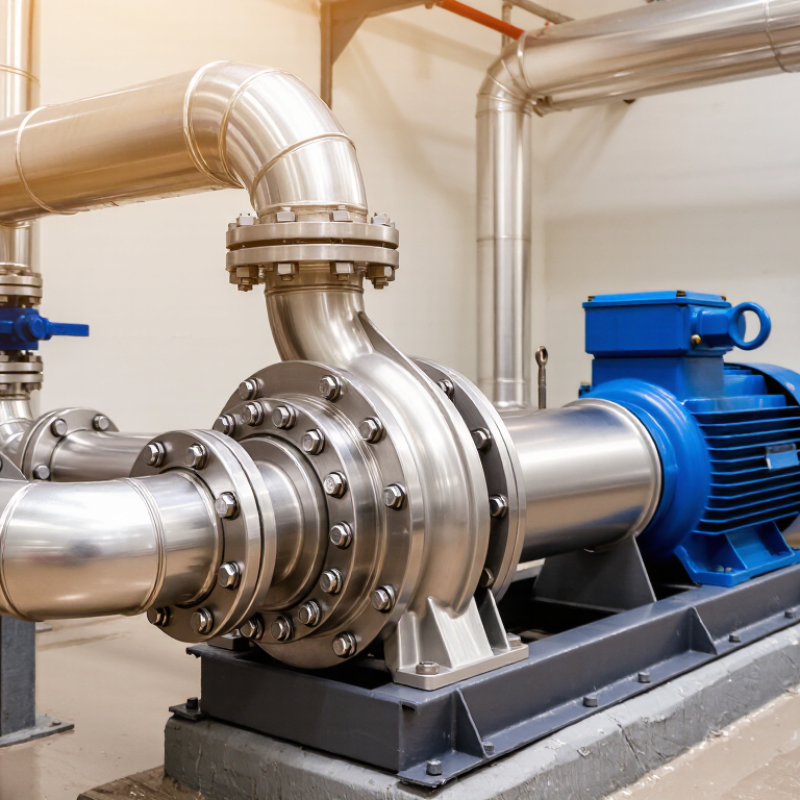
A CHLF pump is generally a horizontal, multistage centrifugal pump, though the exact designation can vary among suppliers. Inside its casing, several impellers sit along one shaft. An electric motor spins the shaft, drawing liquid into the first impeller. Each stage adds energy, and the liquid moves through guide passages toward the next impeller. The result is higher pressure than a single-stage design can typically provide. The pump does not create pressure from nothing; its performance depends on the system, liquid, and operating conditions.
These pumps are commonly considered for clean-water duties such as building supply, pressure boosting, and equipment circulation. They are usually not self-priming, so the suction line and pump often need proper filling before startup. Check the performance curve against the required flow and pressure, rather than choosing by outlet size alone. One detail deserves a second look: a pump that meets the target at one operating point may perform poorly if demand changes widely.
Tips: Confirm liquid temperature, suction conditions, and material compatibility before selection. Keep the inlet free of air leaks, and avoid running the pump dry. Listen during startup. Unusual vibration or a sharp change in sound is worth investigating, even when the pressure gauge looks normal.

CHLF commonly describes a horizontal, multistage centrifugal pump with stainless-steel wetted components. Its stacked impellers build pressure in a compact footprint, making it suitable for clean-water boosting, circulation, and light industrial service. Naming conventions vary, so confirm the construction and performance curve on the supplier’s datasheet. Small differences matter.
Buyers typically compare standard-speed motor configurations with versions paired to variable-frequency drives. A drive can adjust flow to changing demand, but it cannot correct poor pump sizing. The U.S. Department of Energy’s Improving Pumping System Performance sourcebook reports that pumping systems use nearly 20% of the world’s electricity. That figure makes operating conditions worth checking, not just purchase price. Review rated flow, total head, liquid temperature, and expected daily run time.
Configuration details affect installation and maintenance. Check whether inlet and outlet connections match existing pipework, and confirm seal materials suit the liquid and temperature. Stainless-steel grades differ in corrosion resistance; “stainless” alone is not a full specification. A dry-run safeguard or pressure control may be useful where supply conditions fluctuate. Yet extra controls add complexity, and they are not automatically necessary. Request the pump curve and motor data before comparing quotations.
A CHLF pump is commonly built as a horizontal, multistage centrifugal unit. Its casing guides water through several impellers, adding pressure at each stage. The shaft transfers motor power, while bearings support rotation and a mechanical seal limits leakage. Small details matter. Seal wear, trapped air, or a partly blocked strainer can reduce dependable output. Materials should suit the fluid and temperature; stainless steel may resist corrosion, but it is not a universal solution.
Performance depends on the duty point: required flow, total head, and available suction pressure. The U.S. Department of Energy’s Improving Pumping System Performance sourcebook estimates that pumping systems account for nearly 20% of global electricity demand. That makes efficiency more than a catalog figure. Compare input power and hydraulic duty under actual operating conditions. ANSI/HI 9.6.3 guidance from the Hydraulic Institute emphasizes operating regions around a pump’s best efficiency point, though acceptable limits vary by design. Check the curve, NPSH requirements, and motor load before selecting stages. I would not trust a “high efficiency” label alone; real piping losses can change the result.
Comparison of common horizontal multistage centrifugal pump configurations used for clean-water and compatible low-viscosity liquid duties. Actual performance depends on the specific model, impeller, materials, motor, and operating conditions.
| Pump Type | Typical Construction | Key Components | Typical Performance Characteristics | Common Applications | Selection Considerations |
|---|---|---|---|---|---|
| Standard horizontal multistage | Horizontal shaft with multiple impellers and diffusers arranged in series; commonly supplied with a close-coupled or base-mounted motor. | Inlet and outlet casing, impellers, guide vanes or diffusers, shaft, mechanical seal, bearings, and electric motor. | Stages add head while flow is largely determined by impeller size and speed. Small and medium pump models commonly serve duties from a few cubic metres per hour to several tens of cubic metres per hour; head varies considerably with stage count and model. | Building water supply, pressure boosting, clean-water transfer, and light industrial circulation. | Check the duty point against the pump curve, required pressure, available suction pressure, motor supply, and water temperature. |
| Compact close-coupled multistage | Pump and motor form a compact assembly, typically with the pump mounted directly on the motor shaft or connected by a short coupling. | Multistage hydraulic cartridge, compact casing, mechanical seal, motor, and terminal box. | Space-saving design for comparatively modest flow and pressure-boosting duties. Compact models may have limited options for on-site maintenance compared with frame-mounted designs. | Small commercial buildings, equipment skids, domestic water systems, and compact process units. | Verify installation clearances, motor enclosure and electrical requirements, allowable starts per hour, and access for seal or motor service. |
| Stainless-steel wetted multistage | Multistage hydraulic assembly with stainless-steel wetted parts, available in stamped, formed, or cast constructions depending on design. | Stainless-steel impellers and casing sections, shaft, mechanical seal, bearings, and motor. | Hydraulic performance is selected from the same model-specific curve principles as other multistage centrifugal pumps. Stainless-steel construction can improve corrosion resistance for compatible liquids but does not make every grade suitable for every chemical. | Clean-water handling, food and beverage utility services, treated water, and applications requiring corrosion-resistant wetted parts. | Confirm the exact steel grade, seal-face and elastomer compatibility, liquid chemistry, chloride level, and temperature limits with the supplier. |
| Base-mounted horizontal multistage | Pump and motor are mounted separately on a common base and connected by a coupling; alignment is set during installation. | Pump stages, shaft and bearings, mechanical seal, flexible coupling, coupling guard, baseplate, and motor. | Offers greater flexibility for motor selection and maintenance access. Capacity and head remain model- and speed-dependent; alignment and a suitably rigid foundation are important for reliable operation. | Industrial water systems, larger booster packages, and installations requiring serviceable or replaceable motors. | Allow for foundation and alignment work; check coupling-guard requirements, pipe loads, vibration limits, and site maintenance capability. |
| Variable-speed multistage booster configuration | A multistage pump paired with a variable-frequency drive (VFD), either integrated with the motor or installed in a control panel. | Multistage pump, motor, VFD, pressure sensor or transmitter, controller, and protective devices. | Speed control can adjust delivery to changing demand. For a centrifugal pump operating within its allowable range, reducing speed generally reduces flow and head; actual energy savings depend on the system curve and control strategy. | Demand-variable building supply, process-water systems, and pressure-maintenance installations. | Check the motor’s VFD suitability, minimum and maximum speeds, sensor location, electrical harmonics, pressure setpoint, and dry-running protection. |
| Hot-water-compatible multistage configuration | Horizontal multistage pump configured with materials and sealing components suitable for the specified liquid temperature. | Impellers and casing, temperature-rated mechanical seal and elastomers, shaft, bearings, and motor. | Permissible liquid temperature is design-specific. Higher temperature can affect seal life, clearances, suction conditions, and motor loading; there is no universal temperature limit for all pumps in this category. | Hot-water circulation, boiler-feed support duties within the pump’s rating, and thermal utility systems. | Confirm maximum and minimum liquid temperature, inlet pressure, vapor-pressure margin, seal specification, and any required insulation or cooling provisions. |
Buyer note: Before ordering, request the exact pump curve and confirm rated flow, total head, efficiency, NPSH requirements, liquid properties, materials, seal arrangement, motor voltage and frequency, and applicable conformity documentation. Performance ranges and limits must be verified for the selected model.
How to Select a CHLF Pump for an Application
Many CHLF pumps use a horizontal, multistage centrifugal design, but confirm the exact model and materials before comparing options. Start with the required flow rate and total head at the actual operating point. A pump selected from maximum figures alone may run inefficiently or fail to deliver enough water through long pipework. Check the performance curve, then allow for real losses from elbows, filters, valves, and elevation changes. Small details matter.
Next, match the pump to the liquid and site conditions. Record its temperature, cleanliness, and any chemical content; these can affect seals and wetted materials. For a clean-water system, stainless-steel construction may be suitable, but material compatibility should be verified rather than assumed. Check inlet pressure and available suction head to reduce cavitation risk. Measure the installation space, pipe connections, and supply voltage too. A motor that fits the duty point but not the local electrical supply is not a good fit. If demand varies, consider whether a variable-speed arrangement is appropriate, and confirm its limits with the supplier. Selection is rarely perfect on paper; leave room to review the operating data after installation.
Global Sourcing, Standards, and Maintenance Considerations
Many CHLF units are horizontal multistage centrifugal pumps, but buyers should confirm the exact design with the supplier. Match the pump to required flow, head, liquid temperature, and installation space. For example, a compact unit may suit a clean-water booster system, while a poor match can bring noise, excess heat, or unstable pressure. Small details matter. Request a performance curve for the proposed operating point, not just the maximum figures on a product sheet.
For global sourcing, check material descriptions, motor voltage and frequency, seal options, and the documents required in the destination market. Ask for relevant test records and conformity documents, and confirm that they describe the supplied configuration. A document can look complete yet omit a motor or seal variant. Confirm spare-part availability, packaging, warranty terms, and realistic delivery times before placing an order. These points are easy to overlook.
Maintenance planning starts before installation. Provide clean inlet conditions, avoid dry running, and check alignment, vibration, temperature, and leaks during operation. Keep a strainer clean, but do not treat it as a cure for poor piping. Record baseline readings after commissioning; they make later changes easier to spot. I would still leave room for doubt: operating conditions in the field rarely match a neat datasheet exactly.
Same Day Shipping
ISO Certified Production