Choosing a Silicone Automotive Hose supplier in 2026 takes more than comparing prices and catalog photos. Buyers must match hose construction to real operating conditions, including coolant or air service, temperature changes, pressure, vibration, and available installation space. A hose that looks suitable on a screen may not fit the routing or connection points in a particular vehicle.
This guide introduces suppliers through practical buying criteria: material specifications, reinforcement options, dimensional consistency, testing records, customization capacity, and delivery support. Ask for the applicable temperature and pressure ratings, along with documents that identify the product and its intended use. Check whether samples can be measured against drawings or existing parts. Small details matter. A few millimeters can complicate assembly.
Supplier claims deserve careful review. A polished catalog is not proof. Buyers should clarify production tolerances, quality checks, traceability, warranty terms, and how the supplier handles defects or design changes. These questions do not guarantee trouble-free supply, but they make comparisons more grounded. Price still matters, of course; it just tells only part of the story. This overview is a starting point, not a substitute for engineering review or sample testing. Some supplier details may change during the year, so confirm current specifications directly before placing an order.
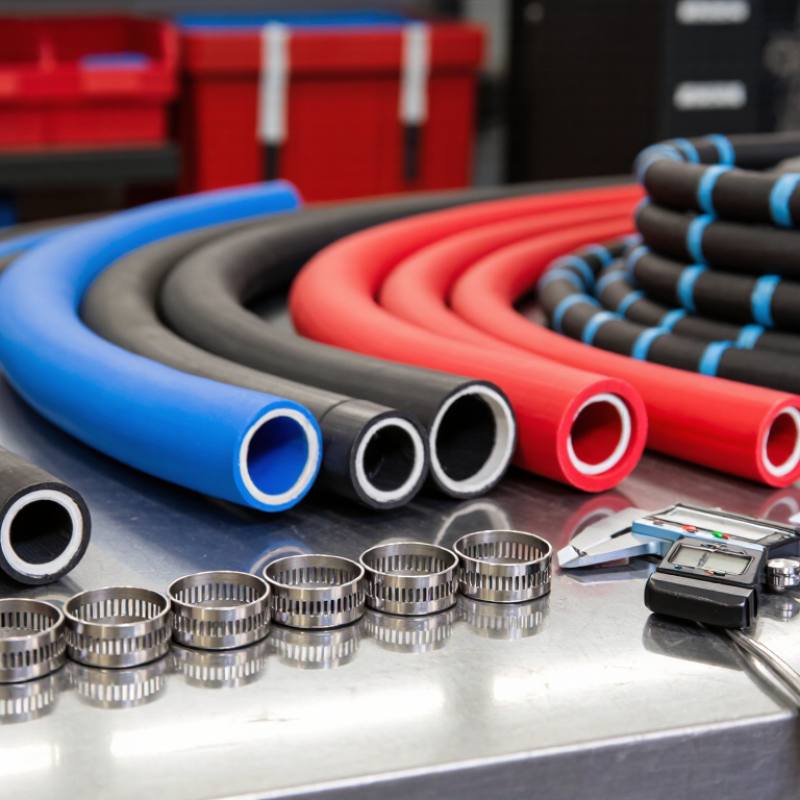
Silicone automotive hoses are flexible conduits that move coolant, air, or other compatible fluids between engine and vehicle systems. Their layered construction can resist heat, vibration, and repeated bending, making them useful near radiators, turbochargers, intercoolers, and some battery thermal-management circuits. The exact temperature and pressure limits depend on the hose’s material, reinforcement, fittings, and installation. Silicone is not automatically suitable for fuel or oil; compatibility must be checked for the specific fluid. That distinction is easy to miss.
Where are they used? Under the hood, a hose may connect a radiator to an engine, or carry compressed air from a turbocharger toward an intercooler. In electric vehicles, coolant hoses can link thermal-management components that help regulate batteries and power electronics. The International Energy Agency reported nearly 14 million electric-car sales worldwide in 2023, about 18% of new-car sales. OICA reported 93.5 million motor vehicles produced globally that year. These figures show the scale of changing vehicle systems, but they do not indicate silicone-hose demand specifically. Fit and duty cycle still decide the application.
Tips: Match the hose to the fluid, pressure, temperature, and bend radius. Check the inner diameter against the pipe, and inspect for abrasion where it passes clamps or brackets. A tight bend can kink the line. It is worth rechecking clearance after installation; a neat-looking fit may still rub during engine movement.

Silicone hoses carry air or coolant through automotive systems. The chart shows typical temperature capability ranges for common silicone hose types.
Temperature ranges are indicative, not universal product ratings. Actual limits depend on the silicone compound, reinforcement, pressure, installation, and exposure conditions. Always check the hose manufacturer's specifications.
Silicone automotive hoses must hold shape and seal under heat, vibration, and repeated pressure changes. Buyers should request test data for operating temperature, burst pressure, vacuum resistance, and expected service life. Fit matters. A hose that clears a bench test may still rub against a bracket after installation.
Check the exact coolant, oil, or air exposure before approving a compound; silicone is not automatically compatible with every fluid. Confirm inner diameter, wall thickness, bend radius, reinforcement layers, and connection tolerances against the application drawing.
Ask suppliers for batch traceability, material declarations, inspection records, and test methods tied to the quoted part. Verify which vehicle or market requirements apply, rather than relying on a generic “automotive grade” claim.
Test it hot. One detail is easy to miss: clamp position can change sealing performance, especially on short bends.
I would want samples evaluated in the actual routing, though that step can delay sourcing. Supplier paperwork helps, but it cannot replace a fit check or independent validation.
Evaluate a silicone hose supplier by test evidence, not brochure temperature claims. Ask for the exact compound grade, reinforcement details, operating limits, and batch traceability. OICA’s 2023 production report recorded about 93.5 million vehicles built worldwide, roughly 10% more than in 2022. That scale makes repeatable supply and clear change control practical concerns, not paperwork.
Request test results for the hose in your actual application: hot coolant exposure, pressure cycling, ozone resistance, and dimensional stability. Ask how samples were conditioned and how many were tested. SAE J20 may help define requirements for applicable coolant hoses, but it does not replace vehicle-specific validation. IEA’s Global EV Outlook 2024 reported nearly 14 million electric car sales in 2023, about 18% of global car sales. For electrified platforms, confirm coolant compatibility and routing clearances rather than assuming a familiar hose design will fit.
Check whether certificates, inspection records, and lot codes connect to the delivered product. Compare samples from different production runs; small bore or wall-thickness changes can affect clamping and flow. Evidence matters. A supplier’s stated maximum temperature is not a service-life guarantee. One judgment call remains: buyers may need to balance documented test coverage against lead time and cost, and that trade-off deserves a written review.
Use this supplier scorecard to compare capabilities against your specific vehicle application, drawing, and customer requirements. The suggested weights are a buyer-planning framework, not an industry ranking; adjust them to reflect project risk and priorities.
| Evaluation Dimension | Suggested Weight | What Buyers Should Verify | Useful Evidence to Request | Potential Warning Signs |
|---|---|---|---|---|
| Application and specification fit | 20% | Confirm the hose is designed for its actual service: coolant, charge air, or another defined application. Check operating temperature, pressure, vacuum, fluid exposure, dimensions, and connection requirements against the engineering specification. | Application-specific datasheet; material and construction details; dimensional drawing; written confirmation of operating limits and exclusions. | Generic temperature or pressure claims without test conditions; no clear statement of fluid compatibility; treating every silicone hose as suitable for fuel or oil service. |
| Testing and product validation | 15% | Ask how the supplier validates the exact hose construction and size. Relevant checks may include dimensional inspection, pressure or burst testing, impulse testing, heat aging, and leak or fit checks, depending on the application. | Test methods and conditions; sample test reports; acceptance criteria; validation plan linked to the customer drawing or applicable specification. | Test results are not traceable to a product or construction; test conditions are omitted; broad claims are offered in place of application-specific validation. |
| Quality management and process control | 15% | Review the quality system, production controls, inspection process, nonconformance handling, and corrective-action process. Check whether automotive-specific requirements apply to the project. | Current quality-system certificate, if applicable; control-plan or inspection-process overview; sample corrective-action response; audit information. | Certification scope does not cover the relevant site or activity; inspection records are unavailable; corrective actions lack documented follow-up. |
| Materials, construction, and traceability | 12% | Understand the silicone compound, reinforcement, layer construction, and end-finish options. Confirm how material changes and production batches are controlled and traced. | Material or construction specification; batch identification example; change-control procedure; relevant certificates or material declarations requested by the customer. | Undocumented substitutions; unclear reinforcement or layer construction; no practical way to link finished goods to production records. |
| Compliance with applicable requirements | 10% | Identify the standards and customer-specific requirements that actually apply to the part. For coolant hoses, SAE J20 may be relevant where specified; verify the required edition, hose type, and test provisions rather than assuming applicability. | Compliance matrix mapping each requirement to evidence; reports or declarations for the specified standard and product; customer-specific approval records where required. | Standards are cited without identifying the product scope or edition; a general certificate is presented as proof of part-level compliance. |
| Engineering and customization capability | 10% | Assess support for formed or molded geometries, reinforcement choices, dimensional tolerances, prototypes, and design changes. Confirm who reviews drawings and resolves technical questions. | Drawing review process; prototype or sample plan; engineering response workflow; documented approval process for design changes. | Unclear ownership of design decisions; changes are made without approval; sample parts cannot be tied to an agreed drawing revision. |
| Capacity, lead time, and continuity | 8% | Evaluate quoted lead times, production capacity, order planning, and contingency arrangements against the project forecast. Confirm which assumptions apply to samples and repeat production. | Written lead-time and capacity assumptions; production planning process; escalation contact; business-continuity or recovery approach. | Unqualified delivery promises; no capacity assumptions; no notification process for supply interruptions or material constraints. |
| Commercial clarity and total cost | 5% | Compare the complete quotation, including tooling, samples, packaging, inspection, shipping terms, and any minimum order requirements. Review how price changes are handled. | Itemized quotation; tooling ownership and maintenance terms; payment and shipping terms; documented quote-validity period. | Unclear tooling ownership; costs are excluded without disclosure; commercial terms differ between quotation and purchase documents. |
| Communication and issue response | 5% | Check whether technical questions, sample feedback, and corrective actions receive clear, documented responses within the project’s required timeline. | Named technical and commercial contacts; response and escalation process; examples of issue tracking or corrective-action documentation. | Responses are inconsistent or undocumented; technical questions are redirected without ownership; urgent issues have no escalation route. |
| Total suggested weighting | 100% | Score each shortlisted supplier consistently against the same requirements. Record evidence and unresolved risks alongside the score. | ||
Suggested scoring method: Rate each dimension from 0 to 5 (0 = no evidence, 3 = requirements partly demonstrated, 5 = requirements fully demonstrated with verifiable evidence), then multiply the rating by the dimension’s weight. Confirm product suitability and required approvals with the responsible engineering and quality teams before purchase.
Selecting a silicone automotive hose supplier takes more than checking a temperature range on a catalog page. Compare the supplier’s published operating limits with your actual coolant, air, or turbocharger system conditions. Ask for pressure ratings, reinforcement details, dimensional tolerances, and compatibility data for the fluids used in your application. Small details matter. A hose that fits a sample assembly may still behave differently after repeated heat cycles. Request test methods and batch-level traceability, not just a general performance claim.
The International Energy Agency’s Global EV Outlook 2024 projected about 17 million electric car sales worldwide in 2024, more than one in five new cars sold. That shift makes thermal-management components an important part of supplier discussions, though it does not mean every vehicle needs the same hose design.
Compare suppliers on documented testing, customization capability, production consistency, and realistic lead times. Ask how they assess aging and pressure resistance under the conditions you specify. A polished datasheet is useful, but it cannot answer every installation question. I would also check sample fit and review test records before approving a production run. Ask for evidence.
For 2026 sourcing, define the job before requesting quotes. Record the hose’s inner diameter, wall thickness, length, bend radius, operating temperature, and pressure range. Note exposure to oil, coolant, ozone, or engine-bay heat. Details matter. Ask each supplier which silicone compound and reinforcement layers suit those conditions. Request written tolerances and confirm whether fittings, sleeves, or custom bends are included. A low price means little if the hose does not fit the installation.
Screen suppliers with specific evidence, not polished catalogs alone. Request a recent product data sheet, inspection criteria, material traceability, and sample lead time. Check that the quoted dimensions match your drawing. Then test samples under realistic temperature and pressure cycles, and inspect for leaks, swelling, delamination, or poor fit. Keep dated results and photographs. Ask how rejected batches are handled and whether production changes are communicated. A neat certificate is not proof of consistent output. If answers are vague, pause and ask again; this can feel slow, but skipping verification often costs more. Supplier visits or a live process review can clarify how materials, curing, and final checks are controlled.
Same Day Shipping
ISO Certified Production